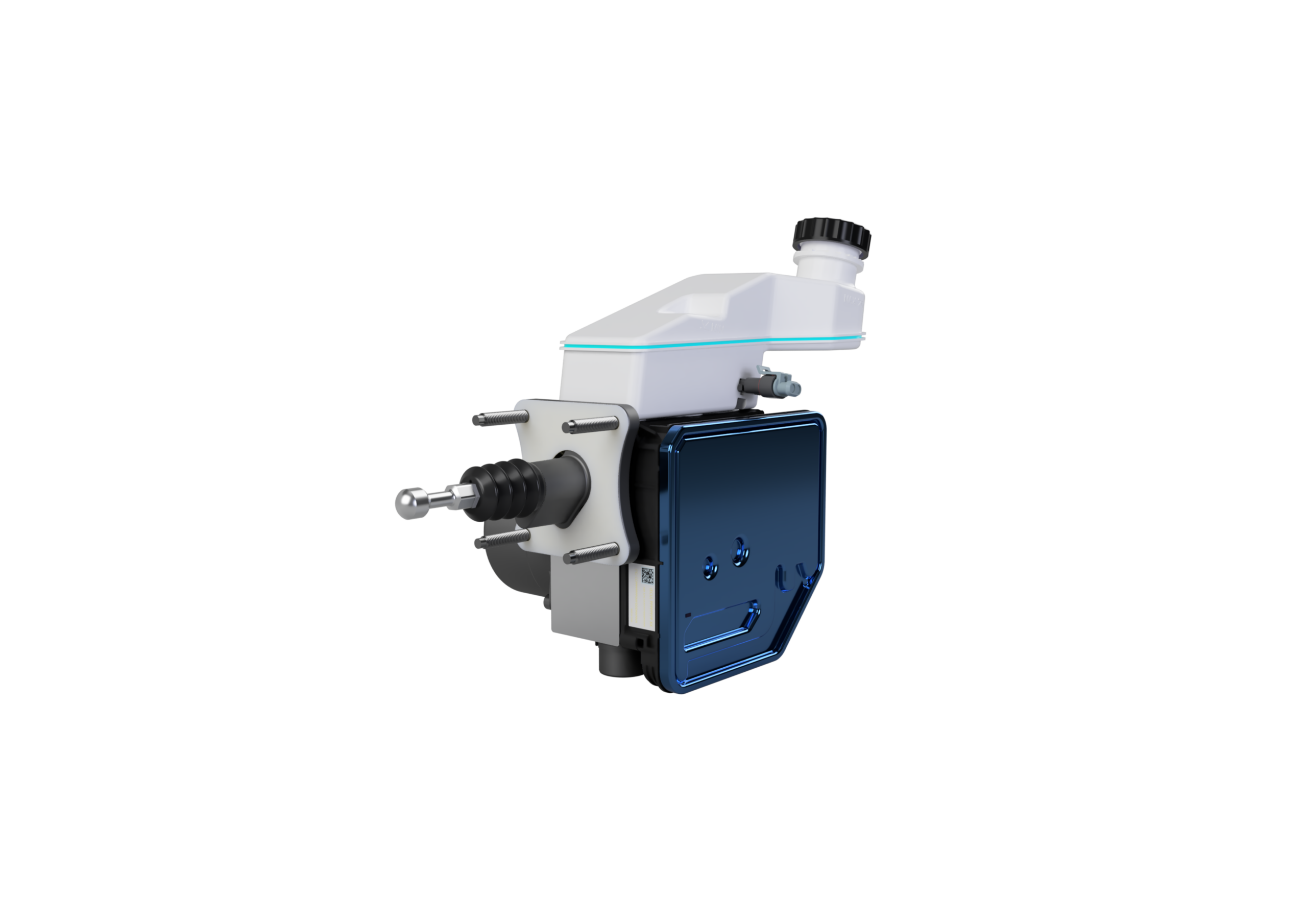
Optimising brake pedal feel through software – iDBC (1-BOX)

Battery electric vehicles accounted for 20% of new EU car registrations in the first five months of 2026, up from 15.3% a year earlier, according to ACEA . Add hybrids and plug-in hybrids and more than two thirds of new cars are electrified.

OEMs have a decision to make with electrified vehicles. Use regenerative braking; blending regen with the friction brakes as necessary. Or solely rely on lift-off regen, which is how one-pedal driving became a defining EV behaviour. The first maximises range but typically has poor brake pedal feel, the other has an unaffected brake pedal but is wasting energy.

The handover is where the driver feels the friction brakes take over from regen part-way through a stop. This is particularly noticeable in the last 10km/h of a stop because the electric motor needs to be rotating to generate torque. There are a multitude of variations that mean making brake pedal feel consistent is a real challenge. For example, when the battery is in a high state of charge full regen is unavailable, so the same pedal input produces a different response compared to when the battery is low. Battery temperature, brake temperatures, brake pedal force – these all impact what blend of regen and friction brake is required.

Decoupling the pedal

Through this approach pedal feel can be calibrated to the character of the vehicle: firm and short for a performance derivative, progressive and light for a luxury saloon, and switchable between drive modes on the same car. Decoupling the brake provides better control of the deceleration whether the stop is served by regen, friction or a blend, and regardless of battery state of charge.

An added benefit of an integrated electronic system is that the motor builds pressure around three times faster than a vacuum booster. Reaching full pressure sooner in an autonomous emergency braking situation at highway speeds has a significant impact on stopping distances.

Optimising range

A coupled system has to bring friction brakes in early because the pedal is mechanically linked. A decoupled system can serve the majority of the stop through regen wherever grip, temperature and battery conditions allow, introducing friction only when demand exceeds what the electric machine can absorb. The driver feels one consistent pedal throughout.

Engineered safety

What happens if the electronics fail on a decoupled brake pedal? Our iDBC was designed around fail-safe operation from the concept stage. The system is developed to ASIL-D and a direct hydraulic path from the pedal pushrod to the calipers remains as a mechanical backup. Even under a fault condition that disables every electronic system on the vehicle, the driver can still stop the car.

A brake system needs to be proven durable and safe across the full operating envelope, which is why the iDBC has been through high and low temperature programmes and a full winter test cycle on ice and snow at our low-adherence facility in Arjeplog, northern Sweden.

Pedal feel in the EV era

The nuances of subjective driving characteristics, such as pedal feel, steering weight and damper tuning, can be key brand differentiators, but noticed, in truth, mainly by enthusiasts and the engineers who created them.

Brake pedal feel in the EV era is different. Poor blending is not a nuance and it is immediately obvious to all drivers, whether they can name it or not. It erodes confidence in the car, and confidence is harder to rebuild than it is to lose.

The ambition, then, is not necessarily a pedal feel that impresses. It is a pedal the driver never thinks about. That is a higher bar than it sounds and it is easier to achieve when the pedal is decoupled and software controlled.

Semi Active Roll Control System (SARC) with a new automatic mode 

  • Automated roll control system can be connected and disconnected on demand while driving at speed

  • SARC removes the compromise between handling and comfort while also improving off-road capabilities

  • Its unique hydraulic architecture enables mode transitions at any suspension travel and even under load

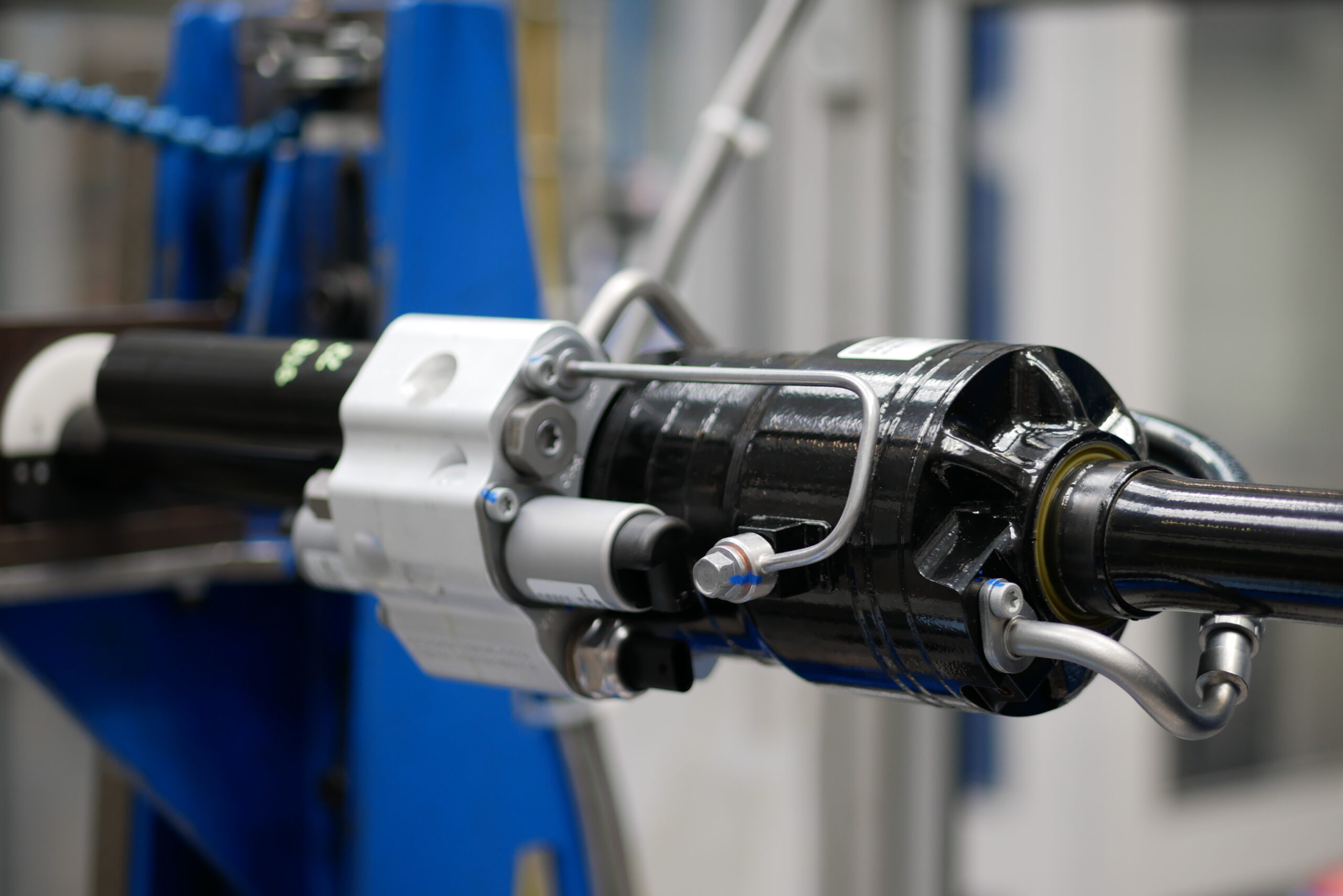
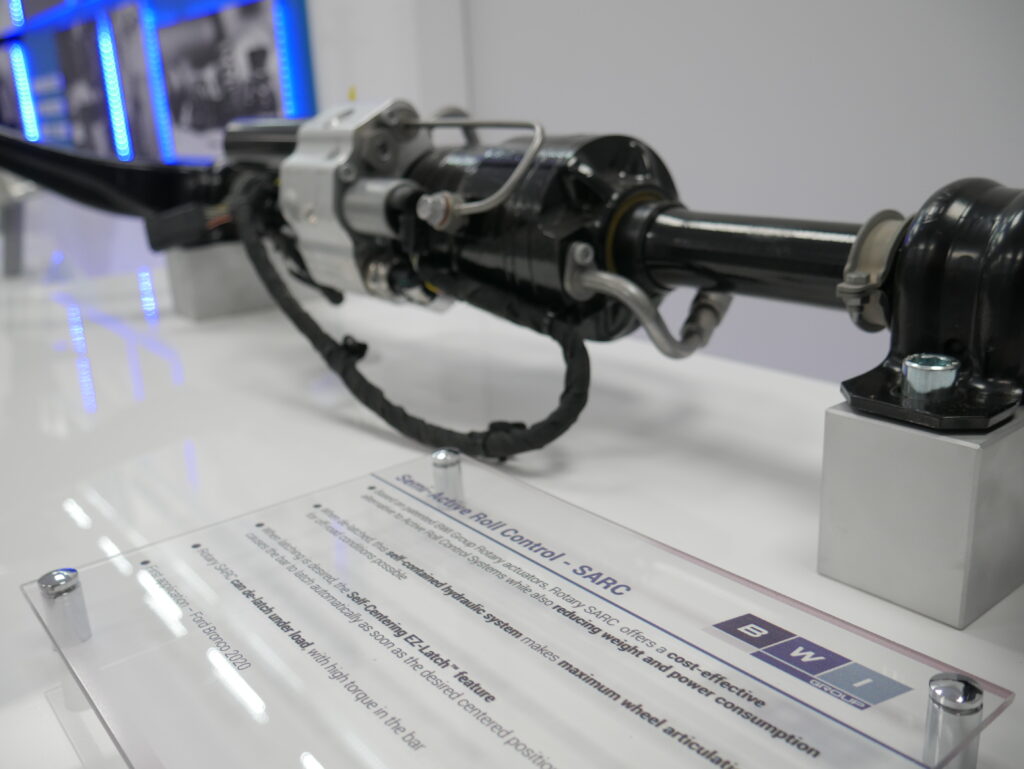
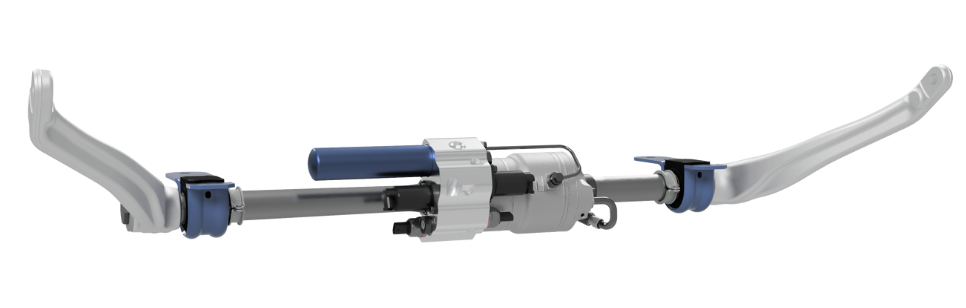
BWI Group has developed an automated active roll control system. The latest update to the company’s SARC (Semi Active Roll Control) product features a new ‘automatic mode’ that enables a vehicle’s anti-roll bar to disconnect and reconnect seamlessly on demand while driving at speed.

The update addresses an increasing challenge in modern chassis engineering as vehicle mass continues to grow. With SUVs accounting for more than half of new car registrations in Europe in 2024, and BEVs typically around 30% heavier than equivalent ICE models, engineers are increasingly forced to compromise between roll stiffness for handling and compliance for comfort. Heavier vehicles necessitate stiffer stabiliser bars, which extenuates the issue.

SARC’s automatic mode aims to remove this compromise. By disconnecting the bar during normal driving, the system allows the vehicle to adopt a softer, more compliant baseline, only engaging the stabiliser bar when required. The control unit uses vehicle data, such as steering angle, speed, lateral acceleration and yaw rate, to determine when the bar needs to reconnect. During high-speed cornering, for example, it reconnects in less than 200 milliseconds and is imperceptible to the driver.

“Chassis engineers are continually trying to improve road handling and comfort, but the two goals are often incompatible,” said Bruno Perree, Engineering Manager at BWI Group. “The latest update to SARC removes that compromise, allowing engineers to optimise the roll bar purely for handling as it will be disconnected the majority of the time. This not only improves comfort but also adds significant off-road capability, which can be a key competitive differentiator in a crowded SUV market.”

At the core of the system is a compact rotary actuator paired with a fully self-contained hydraulic mechanism. The hydraulic architecture enables the bar to be connected or disconnected even when the wheels are unevenly articulated, which is something mechanical solutions typically cannot achieve. Automatic self-centring using the company’s EZ-Latch™ technology ensures consistent engagement throughout the suspension travel.

SARC is in production on several global platforms, most recently the GWM Tank series, where it is used to balance on-road composure with off-road traction. The addition of SARC’s automatic mode is expected to broaden its application to a wider range of SUVs and BEVs, where managing mass and maintaining ride quality have become central engineering priorities.

Inside BWI Group’s Semi-Active Roll Control Technology

Vehicles are getting heavier and managing that weight has become a major challenge for chassis engineers. This is driven in large part by the surge in SUVs and the rise of BEVs. At the same time, drivers expect more from their cars: greater comfort, versatile functionality, and even off-road capability. We spoke with Bruno Perree, Engineering Manager at BWI Group, to find out how the latest update of Semi-Active Roll Control (SARC) is helping manufacturers deliver all of these demands without compromise.

Q: For those new to the technology, what exactly is SARC?

Bruno Perree: At its core, SARC is our hydraulic roll-control system that allows a vehicle’s stabiliser bar to connect or disconnect on demand. Traditional stabiliser bars force engineers into a compromise: make them stiff and you improve on-road handling, but you hurt comfort and off-road articulation. Make them softer and you improve comfort and mobility on rough surfaces, but the vehicle’s handling will be impacted.

SARC removes that compromise entirely. Our system uses a compact rotary actuator and a self-contained hydraulic mechanism to engage or disengage the bar in real-time. There’s no external pump or long pipework under the vehicle, so the packaging is neat and the power consumption is extremely low.

Q: What’s new in the latest version of SARC?

BP: The biggest step forward is the new ‘automatic mode’. Previously, the driver had to choose whether the bar was connected or disconnected via terrain modes. Now the system decides for itself.

It continuously monitors vehicle attributes such as steering angle, vehicle speed, lateral acceleration and yaw rate, and connects or disconnects the bar automatically. The bar can reconnect in under 200 milliseconds, so the transitions are completely transparent to the driver.

The key advantage here is that the vehicle can run disconnected almost all the time. It only needs the bar to be connected during cornering for handling or safety reasons. The rest of the time you get maximum comfort and full wheel articulation for better off-road capabilities.

Q: Why is that such a big benefit for OEMs?

BP: Essentially, this eliminates a compromise that chassis engineers have lived with for decades. It isn’t a particular issue for small city cars, but SUVs are big, heavy and have a high centre of gravity. To keep them stable, you need very stiff roll bars, so these applications are particularly prone to this compromise.

With more than half of all new registrations in Europe being SUVs  it is a common problem for the industry now. SARC allows engineers to remove the compromise between handling and comfort and also provides the vehicle with much better off-road capabilities, which can be a competitive differentiator for OEMs.

Q: How has SARC been received by the end users?

The feedback from drivers has been extremely encouraging. When the Ford Bronco launched, which is equipped with SARC, journalists and early test-drivers quickly picked up on the switchable stabiliser bar and highlighted it as a key factor in the vehicle’s ride quality and off-road capability. We saw a similar reaction in China with Great Wall’s Tank 700 Hi4-T, which also uses SARC. The vehicle was very well received by both customers and the media, even winning a “Best Off-Road Award”.

Q: How does SARC improve off-road performance?

BP: When disconnected, the system provides zero roll stiffness. This is what you want for maximum wheel articulation, which is critical for traction. For example, on the Ford Bronco, the Ramp Travel Index (RTI), which is a measurement of axle articulation, increases by more than 20% when the bar is disconnected . When off-roading, this extra wheel travel can make the difference between getting stuck and getting out. This essentially means the left wheels are not restricted by what the right wheels are doing and vice versa. The hydraulic architecture is key here. It enables us to disconnect and reconnect under load as we have automatic centering. And because our design is sealed and self-contained, it’s extremely resistant to dirt and debris.

Q: How does SARC compare with other active roll-control technologies?

BP: SARC is the only hydraulic system on the market. This gives us the ability to connect and disconnect at any time, with a very fast response. That’s what makes our automatic mode possible. SARC is unique in being able to achieve this.

Most other solutions are mechanical. They rely on physical alignment to connect, so they often require some level of play to be designed into the system. That play is not good for steering feel, and the systems can’t connect and reconnect on the fly.

Q: What industry trends do you see boosting the adoption of SARC?

BP: There are a few clear shifts happening in the market that are making systems like SARC much more relevant. As previously mentioned, SUVs continue to dominate global sales, and the inherent weight and height issues associated with SUVs place a greater vehicle dynamics challenge that SARC can support.

Electrification is another clear trend. EVs are typically around 30% heavier than their ICE counterparts, making it more challenging to control body mass effectively. At the same time, BEV architectures make it easier to integrate an active roll system, as there are no exhausts or gearbox components in the way.

What’s interesting is that consumer expectations are also evolving. Drivers want more and more from their cars. They want vehicles that feel refined on long highway trips, stay flat and predictable on twisting roads, and real capability off-road. That’s a huge range of attributes to pack into one platform. These trends together are pushing manufacturers to look for smarter, more flexible ways of managing roll stiffness, and that’s exactly where SARC fits in. It gives them the control they need without forcing the compromises they’ve had to make in the past.

Q: What makes BWI Group so well placed to deliver SARC?

BP: BWI Group have been working on hydraulic roll-control technologies for more than two decades now, so we are very familiar with active roll control technologies. Over that time, we’ve developed and manufactured both linear and rotary actuator systems, and that depth of experience is what allows us to push the technology further with each generation.

We also supply some of the world’s largest and most demanding OEMs, which means our systems have to meet very high standards for performance, durability and refinement. And because we operate engineering and manufacturing sites across multiple regions, we’re able to support customers locally throughout development and into production. It’s that combination of long-term expertise, global capability and close collaboration with OEMs that really puts us in a strong position to deliver SARC.

ON-LINE TECHNOLOGY FORUM

The Digitisation of Chassis Systems: Adapting Semi-Active Suspension Systems for Modern Vehicles

In this free, 60-minute innovation forum, BWI Group and independent industry experts will explore the future of semi-active suspension and its role in modern vehicle performance.

They will share insights into MagneRide, BWI’s high-performance controlled suspension technology, covering its mechanical and electronic advancements, large-scale industrialisation, and the benefits for integration flexibility and performance.

The session will also include a roundtable discussion with vehicle dynamics and tuning experts, a behind-the-scenes look at BWI Group’s manufacturing capabilities, and an on-road video demonstration of MagneRide-equipped vehicles in action.

Key topics and takeaways:

  • Technical overview of the latest generation of MagneRide technology
  • Roundtable discussion on the trajectory of semi-active suspension systems
  • Insights into how the MagneRide system is engineered for scalable integration across multiple vehicle types and architectures
  • A look inside BWI Group’s manufacturing facility and how quality is maintained at volume
  • Real-world driving impressions: on-road demonstration of MagneRide’s performance

SPEAKERS

  • Tom Liu – BWI Group’s CEO
  • Philippe Germain, Chief Engineer – Controlled Suspension 
  • Yuan Zamparini – Chief Engineer of Global Suspension Electronics & Software Engineering
  • Dave Shal – Chief Engineer, Suspension Control Systems & Applications
  • Krzysztof Kucharczak – Director of  Product Engineering , Europe
  • Marcin Knapczyk – Chief Engineer

Register for an on-line Technology Forum with a link:

https://mobex.io/webinars/digitising-chassis-systems-upgrading-semi-active-suspension-systems-for-modern-vehicles/


Inside The Ride, Q&A with Chris Goergen, Ride Engineering Expert

For over 20 years, BWI Group Ride Engineer, Chris Goergen, has worked closely with leading global OEMs to bring MagneRide® to life on the road. Whether he’s fine-tuning high-performance sports cars or helping deliver premium comfort for the latest EVs, Chris plays a pivotal role in shaping how vehicles feel to drive. We caught up with him to discuss the unique strengths of MagneRide, how BWI Group’s collaborates with customers, and why tuning suspension is as much about feel as it is about technology.

Q: What does your role as a ride engineer at BWI Group involve?

My focus is on helping OEMs get the very best performance from their MagneRide systems. I work directly on vehicles, collaborating with the customer to integrate our technology into their architecture and calibrate it to their specific requirements. That includes working with software, hardware and control parameters to ensure the system supports the vehicle’s overall ride and handling objectives. Once the system is fully integrated, we move into fine-tuning, typically through subjective evaluation, to bring out the character the customer wants in the vehicle.

Q: How has that relationship with OEMs changed over time?

Vehicle development has evolved significantly, and so has our approach. We’ve adopted a more modular system that gives customers flexibility depending on their programme needs. We can supply a complete MagneRide system, including the dampers, sensors, ECUs and software, or just the individual components that are required. Some customers want full system delivery and tuning support, while others prefer to embed our control algorithms into their own ECUs.

This modular approach breaks down barriers to entry and enables us to adapt to a wide variety of vehicle architectures. Our engineers work closely with customers to determine the best integration strategy. As systems become more centralised and software-defined, we’re acting less like a component supplier and more like a technology partner.

Q: What does a typical tuning session look like for you?

Each project starts with integrating MagneRide into the customer’s system architecture. That means aligning our software with their control environment and ensuring everything communicates seamlessly. Once the system is operational, we begin the calibration process, adjusting control parameters to match the desired ride and handling characteristics.

From there, we focus on refining the system through real-world testing. This includes evaluating ride comfort, body control, noise and vibration levels, and overall vehicle dynamics. Our role is to help the customer achieve their targets efficiently, whether that’s sharp handling for a performance model or enhanced comfort in an electric SUV.

Q: What makes MagneRide different from other semi-active suspension systems?

The key difference is how the damping force is controlled. Traditional semi-active systems use solenoid valves, which often require physical hardware changes during development. That means manufacturing and swapping out multiple sets of valves to refine the tuning. This is time-consuming and resource-intensive.

With MagneRide, we don’t need to change any hardware during tuning. The damping force is controlled digitally via software, so I can make changes directly from my laptop. This gives us much more agility in development, reduces costs, and speeds up the entire calibration process.
Q: MagneRide is often praised for its fast response time. What does that mean for ride quality?

MagneRide can respond in just a few milliseconds, which allows us to precisely control both primary ride (body movement) and secondary ride (wheel control). On challenging road surfaces, such as uneven country roads, this responsiveness makes a big difference. We can maintain strong body control without compromising comfort or introducing harshness from the wheels. Other systems often reach a point where they have to increase damping to control the body, but that can lead to an overly stiff ride. MagneRide gives us the flexibility to balance both.

Q: Does that also help when tuning different vehicle types?

Absolutely. MagneRide is well known for its performance in sports cars, but it has been improved to be more capable in comfort-oriented vehicles too. In fact, it’s already in use in many of today’s premium EVs and SUVs, where ride quality and noise suppression are critical. Its fast reaction time and wide tuning range allow us to deliver a refined, composed ride even on rough surfaces. That adaptability is what makes it so valuable across different segments.

Q: How has MagneRide evolved since you started working with it?

The system has become faster, more refined and even more integrated. One of the biggest areas of improvement has been secondary ride and how we manage small, high-frequency road inputs. When it comes to body control, earlier generations already outperformed conventional suspension , and we’ve continued to improve response time, NVH characteristics and overall comfort. We’ve also enhanced the system architecture, updating the sensors and ECU to support modern vehicle platforms.

Q: Looking ahead, what’s next for MagneRide?

As EV adoption increases, expectations around noise and ride quality are rising. Without engine noise to mask imperfections, every bump and vibration becomes more noticeable, and the added mass of EVs makes controlling body motion more challenging. At the same time, the shift towards software-defined vehicles is accelerating the need for digitally controlled suspension systems that can be easily integrated and updated. This is where advanced semi-active systems like MagneRide are playing an increasingly vital role.

We’re also working to bring MagneRide to a broader range of vehicles. That means improving affordability and increasing volumes, but without compromising the performance that makes it unique.

Q: What do you enjoy most about your work?

Every project is different, and I get to work on vehicles all over the world. The multicultural aspect of working with Italian, German, American, English, Chinese and Japanese engineers, for example, is always interesting. And of course, being in the car, feeling the difference our work makes, is incredibly satisfying. But it’s never just one person. What I do wouldn’t be possible without the engineering teams behind me. It is the team that writes the code, tests the software, designs and manufactures the parts. It’s very much a team effort, and I’m proud to be part of that.

Note to editors:

To find out more about BWI Group’s MagneRide technology, the company is hosting a webinar on October 8th. It will explore the future of semi-active suspension and its role in modern vehicle performance and provide a detailed technical overview of the latest generation of MagneRide technology. The webinar will also offer insights into how the MagneRide system is engineered for scalable integration across multiple vehicle types and architectures and provide a look inside BWI Group’s manufacturing facility.

To register for the event, click here: https://mobex.io/webinars/digitising-chassis-systems-upgrading-semi-active-suspension-systems-for-modern-vehicles/