Digital Damping For an SDV Future – Yuan Zamparini, Chief Engineer of Global Suspension Electronics & Software Engineering at BWI Group

The Software-Defined Vehicle (SDV) is moving the industry away from traditional hardware-led designs toward a future where software shapes, controls and enhances vehicle functionality, safety and user experience. This shift to more connected systems opens up new opportunities for digitised suspension technologies, such as MagneRide®. We sat down with Yuan Zamparini, Global Chief Engineer for Controls, Electronics & Software for Controlled Suspensions at BWI Group, to explore this further. 

Q: What is MagneRide and how is it digitally controlled? 


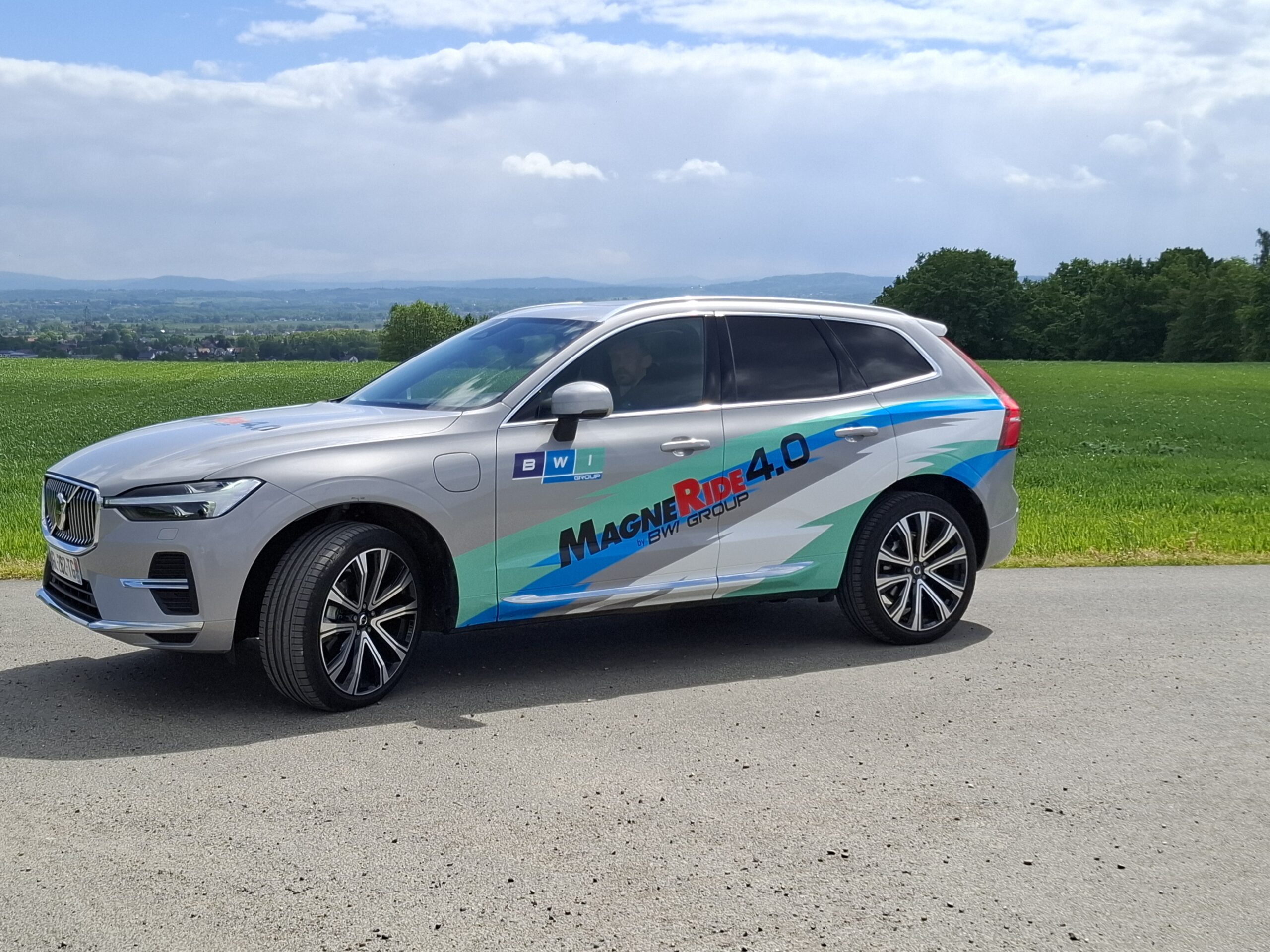
YZ: MagneRide is a semi-active suspension system that uses a magnetic field to energise the magnetorheological fluid, which is filled with iron particles. When a magnetic field is applied, those iron particles align to form a new structure and change the fluid’s viscosity, which alters the damping force. What makes this particularly relevant for software-defined vehicles is that MagneRide is fully and continuously digitally controlled in a wide range of damping forces with millisecond response times. 

As is common with premium technologies, MagneRide found its first applications in high-performance vehicles. But as the industry shifts towards the Software Defined Vehicle and the demand for digital control increases, MagneRide is now being fitted to all types of vehicles, from mid-range sedans to large BEV SUVs. 

Q: How does this digital control advantage translate to SDV applications? 

YZ: The key differentiator is that the system, once base damping characteristics are set, is completely tuneable in software. Unlike solenoid-based semi-active systems that require hardware modifications to change suspension characteristics, MagneRide can be completely recalibrated through the ECU. It enables manufacturers to fully customise settings for regional markets, for example, perhaps to make the vehicle more compliant for North American preferences or sportier calibrations for European drivers. This would simply be too expensive if hardware changes were necessary. We have the capability for over-the-air (OTA) updates, so manufacturers can adjust suspension tuning post-production if required, cost-effectively. 
Q: What new functionalities does SDV architectures unlock for MagneRide? 

YZ: MagneRide’s response times are one of the quickest on the market and it can adjust to road inputs almost instantaneously. However, we have also developed a new preview function. By integrating with the vehicle’s perception system, which is now possible thanks to SDV architectures, we can use cameras and radar to evaluate road surfaces ahead and prime the dampers accordingly. For example, if we detect a pothole or sharp corner approaching, the damping characteristics can be pre-adjusted to optimise the performance. We have also developed a real-time arbitration system that weighs this ‘preview’ information against the ‘instantaneous’ inputs to determine the optimal response. This ultimately increases the performance of the suspension and gives OEMs more flexibility. 

This integration can also be used to optimise the suspension in emergency situations. For example, if automatic emergency braking is triggered, the suspension system can instantly adjust itself to improve braking distances and control. The improvement is only a safety enhancement, not a mitigation mechanism, but in life and death situations, every advantage matters. 

Q: How do you see the relationship between traditional automotive suppliers and OEMs evolving in the SDV era? 

YZ: The relationship is becoming more collaborative and integrated. Rather than simply supplying individual components, we’re becoming development partners. We are contributing to the fundamental changes which are happening to the vehicle architecture. This requires deeper technical integration and long-term partnerships, but it also enables solutions that are much more optimised for the complete vehicle system rather than individual components. We are also responding to an increased demand for a more modular approach to delivery. OEMs want to be able to pick and choose elements of the solution that best fit their architecture. 

Q: What does the move toward modularity mean for suppliers and OEMs? 

YZ: BWI Group is focusing on providing flexible modular solutions that can integrate with both the OEM’s central controller and the zone controller. Depending on their specific needs and existing subsystems, customers can choose different combinations of our hardware, software modules or integration services. This approach gives OEMs more control over their vehicle architecture while still benefiting from our specialised expertise in suspension control algorithms, hardware and software. 

Q: Are there any SDV partnerships with OEMs that you can discuss? 

YZ: We’re currently involved in a co-development program with a major US OEM for their first SDV platform. The customer established their SDV development roadmap back in 2021 and, given our long-standing relationship and the central role MagneRide plays in the SDV architecture, they invited us to participate from the beginning. They have now built prototypes for benches and vehicles and we have supplied the entire digital suspension ecosystem; including the dampers, algorithm in the central controller, smart actuator controller with Ethernet capability, and associated sensors. 

Q: What were the main technical challenges in adapting to an SDV architecture? 

YZ: One of the biggest challenges was integrating real time-controlled systems to the new Ethernet communication architecture. The complexity comes from coordinating multiple digital systems while maintaining the real-time response capabilities our solutions have become famous for and are critical for suspension performance. We have used a parallel approach by developing a level 4 virtual model and physical prototypes, and we’re now on our production infrastructure-ready generation of sample.  

Q: SDV is transforming all aspects of vehicle design. How is it affecting chassis systems in particular? 


The most obvious shift is that all systems are becoming more connected and software-driven. Instead of treating each feature separately, SDV architectures allow a central controller to manage them collectively and cooperatively, making the chassis control a truly integrated part of the vehicle’s ecosystem. This is opening up massive possibilities for OEMs and is where MagneRide’s large scale of controllability has an advantage. 

Q: How is artificial intelligence being integrated into the latest MagneRide systems? 

YZ: A high potential area for the new generation development would be an AI-based self-learning tuning system. MagneRide is tuned using an array of parameters and inputs and varies significantly based on vehicle type, size and intended use. This AI system dramatically reduces both the cost and time required for tuning and testing, which was already faster than solenoid valve-based systems, while ultimately delivering better performance through continuous learning and optimisation. 

Q: Beyond suspension dampers, how is BWI Group positioning itself in the SDV space? 

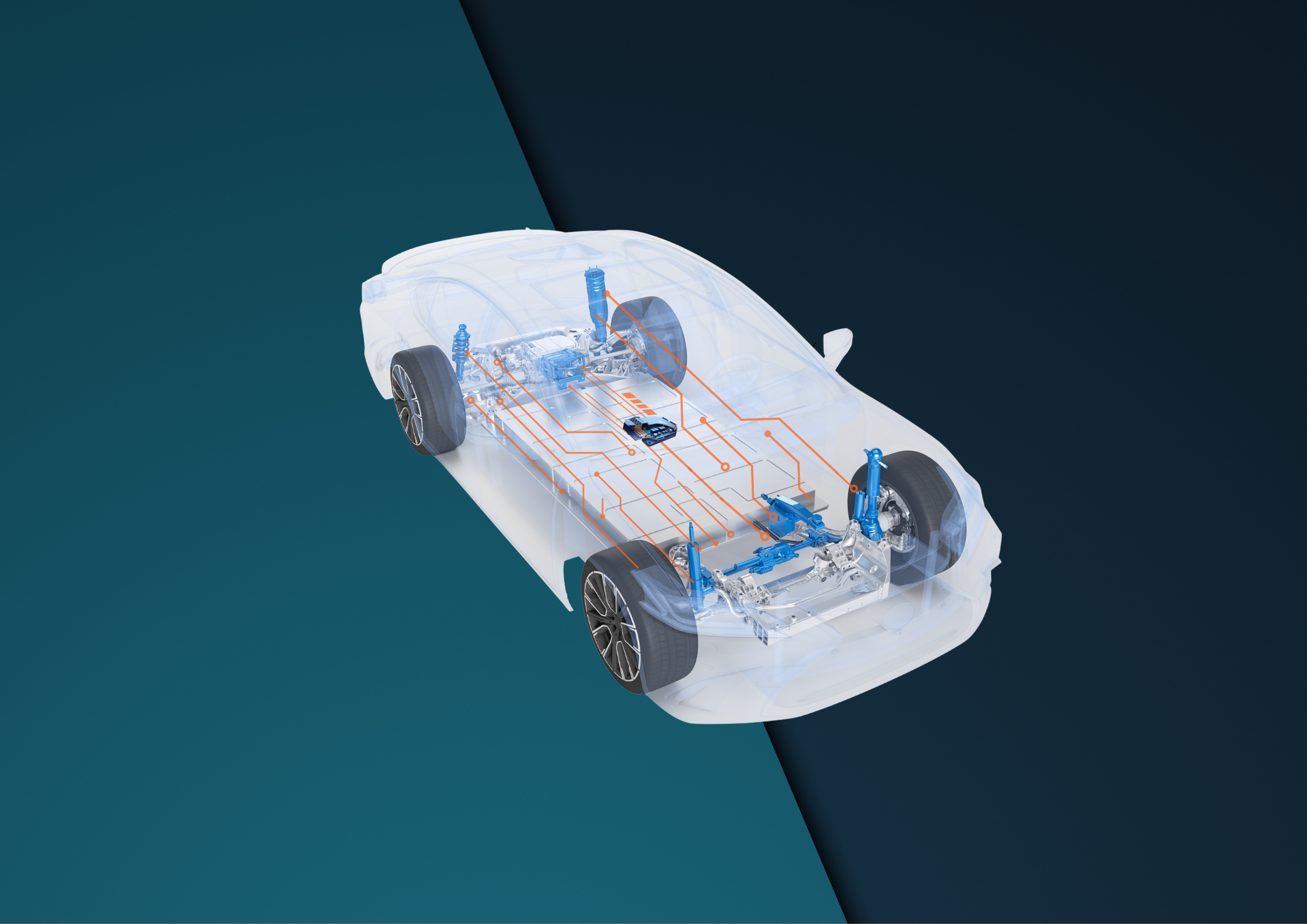
YZ: We identified the SDV trend early and have been developing complementary digitally-controlled solutions. Alongside MagneRide, we offer semi-active stabiliser bar systems, Four corner Air Suspension control systems, hydraulic lift systems, magnetorheological powertrain mounts and electric braking systems. The advantage is that all these chassis subsystems can work coordinatively and contribute to the fundamental functions of Chassis and body control, sharing inputs and processing functions. This creates opportunities for holistic chassis optimisation that wouldn’t be possible with traditional, isolated systems. 
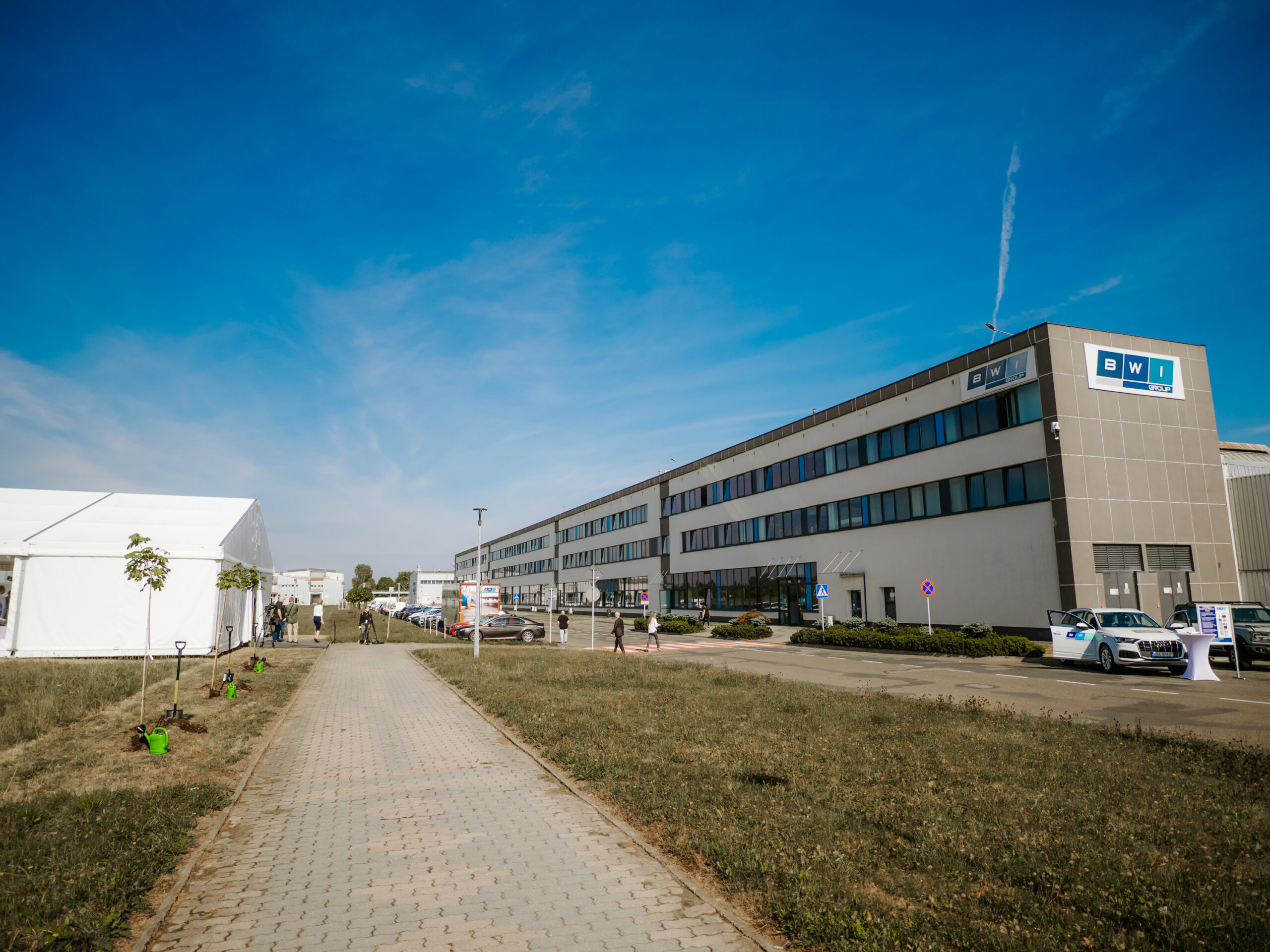
BWI Group Krosno plant is celebrating its 80th anniversary

Sept. 12th, 2024, Krosno, Poland

  • 80 Years of History
  • New challenges for the plant going forward
  • Supplying suspension products to major OEMs globally

On September 12th, current and former employees, BWI Group management and invited guests took part in the celebration of the 80th anniversary of the shock absorber factory in Krosno. The plant is today not only one of the largest production facility in the BWI Group, but is also, with impressive statistics and decades of experience, a proven and reliable partner supplying globally the automotive industry with innovative suspension solutions.

„Our strength comes from values we stay aligned with. Innovation, quality and customer care are the pillars on which we have built our reputation”. says Dariusz Kucza, Plant Director.

80 Years of History
The beginning of the plant is back to 1944. After years of wartime turmoil, workers returned to the destroyed rubber factory to restore production and revive the spirit of the industry, so much needed in Poland at that time. Initially, the activity was focused on the repair of agricultural equipment. By the end of the 1950s, the Polish government decided to narrow down the production to the manufacturing of spring elements for motorcycles and telescopic shock absorbers. In 1958, the first shock absorber was produced in the Krosno factory, and in 1969 the site was officially named POLMO. In 1997, the American Company Delphi Automotive Systems took over the facility. Under this new name, Krosno plant acquired new customers and modernized its production processes. The development and strengthening of the plant continued with a redoubled intensity when BWI Group became the new owner of the site in 2009.

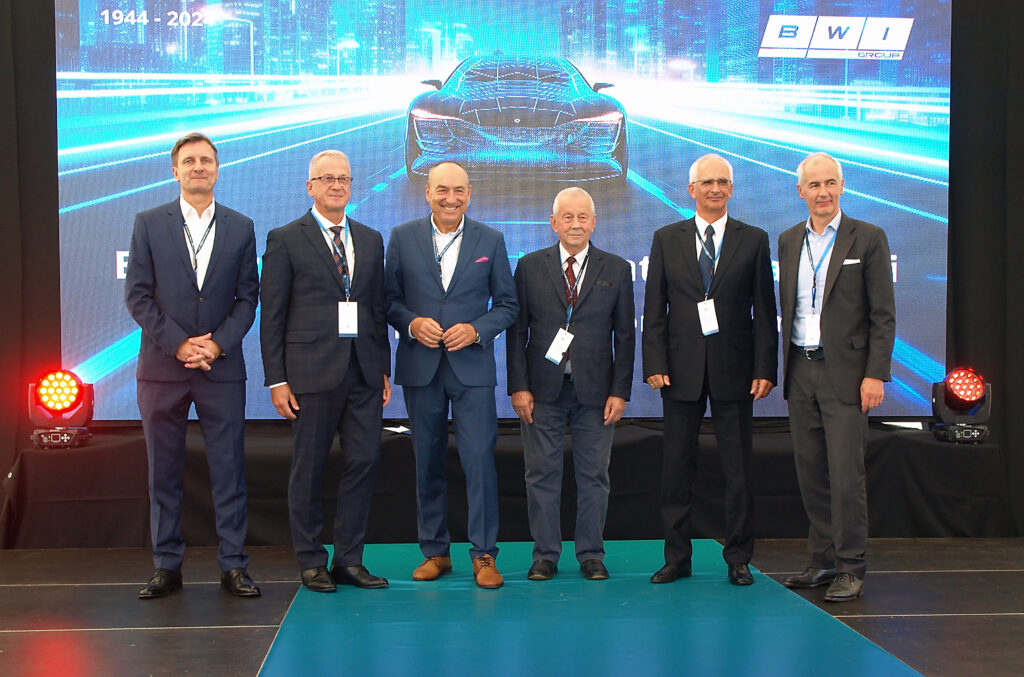
Patrice Colomb – BWI Group President, EU, Dariusz Kucza – Krosno Plant Manager with former Krosno Plant Managers

New challenges
80 years of existence makes the Krosno factory not only the witness of the history, but also shows the transformation that Poland went thru the last eight decades. During the post-war time, there was a giant demand for reviving the industry, while facing a lack of resource and tools required for an efficient operation. Then came the time of privatization of the industry by the end of the 20th century, when foreign capital and modern technologies entered Polish industry. Today in the hands of BWI Group, the manufacturing facility entered into a new chapter with operation based on Manufacturing 4.0 solutions, the highest quality standards and the newly adopted Sustainability policy. In this regard, the plant began its transformation last year towards 50 percent reduction electricity carbon emissions, as well as a 15 percent reduction in production waste by the end of 2024.

Today’s Products and Customers
The factory is currently supplying to major OEMs automotive suspension components, including various shock absorbers and struts, controlled dampers such as MagneRide® dampers, Semi-Active Roll Control systems, Magneto-Rheological engine mounts, but also Electronic Control Units and sensors, which enhances the BWI Group’s ability to develop electronic and electrical architectures. Krosno is delivering to 46 customers in 97 locations worldwide. Among these customers are BMW, Stellantis, Ford, GM, Audi, Volvo, VW, Ferrari and Lamborghini.

The plant in Krosno is one of the largest employers in the Sub-Carpathian region, and its long history makes it also one of the most recognizable and significant industry company of the Polish economy. With more than 300 million units produced since its debut, the plant has not only gone thru the history of industrial development in Poland, but also contributed to it.

“None of our successes would have been possible without the people who made and make this plant. Let me express my great gratitude to all – employees, both those who have been with us for years and those who have joined us recently. It is their hard work, commitment and loyalty that are the foundation of our success.” adds Plant Director expressing his gratitude towards the Staff.


About BWI Group
BWI Group’s is one of the market leader with high quality brake and suspension products and have been recognized by more than 50 global automakers. Thanks to the progress on technological breakthroughs, business development, and production, The company’s total order value rocketed by nearly 300% year-on-year in 2023. The company’s solid development has benefited from the integration of its global resources from three continents, Asia, Europe and North America, to empower global smart mobility. With a heritage reaching back over 100 years, BWI Group is now operating a total of 9 production bases, 7 research and development centers, and 1 software center worldwide.

Data management is the key to improving the production efficiency of suspension and brake systems

In the era of Industry 4.0, data has become a crucial factor driving production efficiency across all industries, including automotive leader in the engineering and manufacturing of advanced suspension and brake systems, BWI Group leverages the power of data analytics to optimize manufacturing processes, increase efficiency and deliver quality and price optimized components to its customers.

Challenges of today’s automotive component manufacturing

Today’s automotive industry exposes manufacturers to unprecedented challenges. The growing pressure to reduce cost while maintaining the highest standards of quality and safety requires innovative approaches to production management. The ability to quickly process and analyze the massive amounts of data generated by modern production lines is key to meeting these challenges. Properly “cleaned” and processed data has the potential to be converted into decision-making processes that lead to actions, contributing to the improvement of quality, efficiency, and reliability of production lines.

Production Data Management at BWI Group

At BWI Group, we are using a data analytics system developed by the Operational Technology Engineering team, which is based on advanced tools to efficiently and reliably manage information from the manufacturing process. With our system, we achieve:

  • Real-time monitoring of Production Line Performance metrics.

This includes identifying the causes of downtime, quality issues, and performance and availability losses. The OPC (Open Platform Communications) systems are used for data acquisition from machine controllers and automation equipment, providing precise and up-to-date insight into production processes. All events are automatically reported, minimizing the need for manual data entry and reducing the risk of errors. Additionally, the data for subsequent analyses is sourced from Single Point of Truth, ensuring a consistent and reliable foundation for continuous improvement and decision making processes in production environment.

  • A cohesive Global Information Management Ecosystem for continuous improvement.

This includes a continuous improvement process, managing suggestions and building on lessons learned. BWI uses the Daily Management System to manage tasks and coordinate actions, allowing for effective monitoring of progress and the implementation of corrective actions. Since the environment is consistent with what is used at all levels of the organization, data flows in an organized manner without loss of information.

  • An environment for converting production data into specific operational activities.

This ensures an integral and reliable flow of information. Data is processed in a hybrid model both in the cloud and using internal server capacity, improving scalability and security in information management. The solution supports the entire process from problem identification on the production line, through the implementation of corrective actions, to sharing the acquired information with other plants.

  • Visualization of Key Performance Indicators (KPIs) on intuitive dashboards created in BI-class systems.

 These dashboards are optimized for different organizational roles and offer various levels of detail, enabling quick and easy analysis of key data and decision-making based on current information.

This advanced approach allows for effective production management, process optimization, and quick response to changing conditions, ultimately contributing to the increased efficiency and quality of BWI products.

Customer Centered – The Customer comes first

Improving processes through the deployment of advanced data analytics results in the single most important end outcome, which is the satisfaction of our customers.  Let’s list a few of the many benefits:

  • Improving product quality by monitoring performance indicators: Quickly detect and eliminate defects, leading to lower defect rates and higher quality of final products.
  • Increased production efficiency: Automating the data collection and analysis process helps to detect downtime and other production issues, resulting in faster delivery time and lower operating cost.
  • Faster innovation: Data analysis enables dynamic implementation of improvements that meet market needs, and introduction of new technologies into products.
  • Increased transparency and better communication: With data visualizations customers have a better insight into production processes and can make faster decisions based on current information.
  • Scalability and data security: Using modern cloud technology combined with in-house server resources ensures that systems remain stable and secure even when the amount of processed data increases.

BWI Group set to start EMB production in 2026, targets “All-by-Wire” by 2035

  • Wire controlled products, including brake-by-wire and active suspension, will contribute 95% to BWI Group’s global sales by 2035
  • The EMB A prototype will be completed in 2024, mass production will begin in 2026
  • Entered partnership with two Chinese OEMs for EMB application
  • BWI eyes a large share of the billion-dollar global EMB market

BWI Group announced on July 10th its “All-by-Wire 2035” global strategy: provide global customers with more smart mobility solutions, leveraging its expertise in brake-by-wire, active suspension, and intelligent systems and architectures. The group expected 95% of the chassis products delivered in 2035 will be fully controlled by wire.

As one of the latest milestones, BWI Group secured two OEM partnership on Electro-Mechanical Braking (EMB) system, and planned to be massively produced EMB for the customers in 2026.

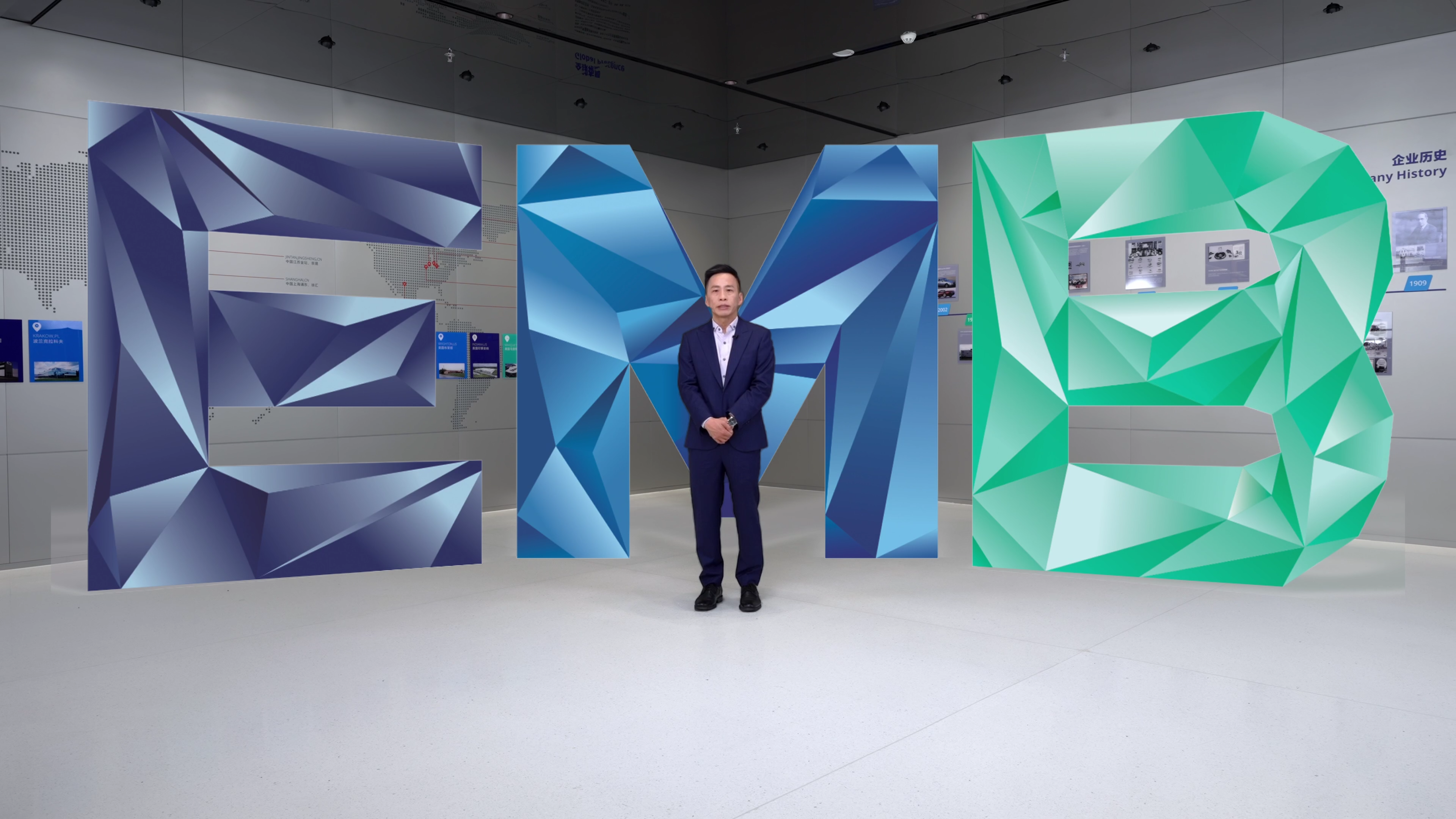
George Chang, BWI Group CEO, announces the mass production of EMB system is set to start in 2026.

George Chang, CEO of BWI Group, said, “BWI Group is dedicated to advancing the electrification and intelligent connectivity of the automotive industry globally, through continuous investment and promotion in the two core areas of highly automated driving and extremely comfortable smart cockpits.“

He outlined that BWI Group’s brake-by-wire products, providing robust safety redundancy, will support L4 and higher levels of automated driving technology; full active suspension products will help build multi-functional and highly comfortable smart cockpits for multi-scenario. Meanwhile, automotive systems and architectures will fulfill the demands of the intelligent transportation era by building integrated hardware-software systems and centralized electronic-electric architectures.

Particularly in the field of brake-by-wire, EMB is a key product for BWI Group and represents a key innovation. BWI Group will complete prototype A development in 2024, establish an automated production line in 2025, and begin mass production for customers in 2026.

Throughout the continuous upgrading of brake-by-wire technology, BWI Group’s ultimate EMB technology has accumulated over 20 years of experience. Thanks to predecessor’s concept validation in 2000, the group’s technology has now evolved into its third generation. To meet market demands, BWI Group entered partnership with ThyssenKrupp Steering, joining forces to leverage each other’s strengths and accelerate the research, development, and production of EMB.

Jiang Yongwei, BWI Group China President, shares EMB research and development achievements led by the Chinese team.

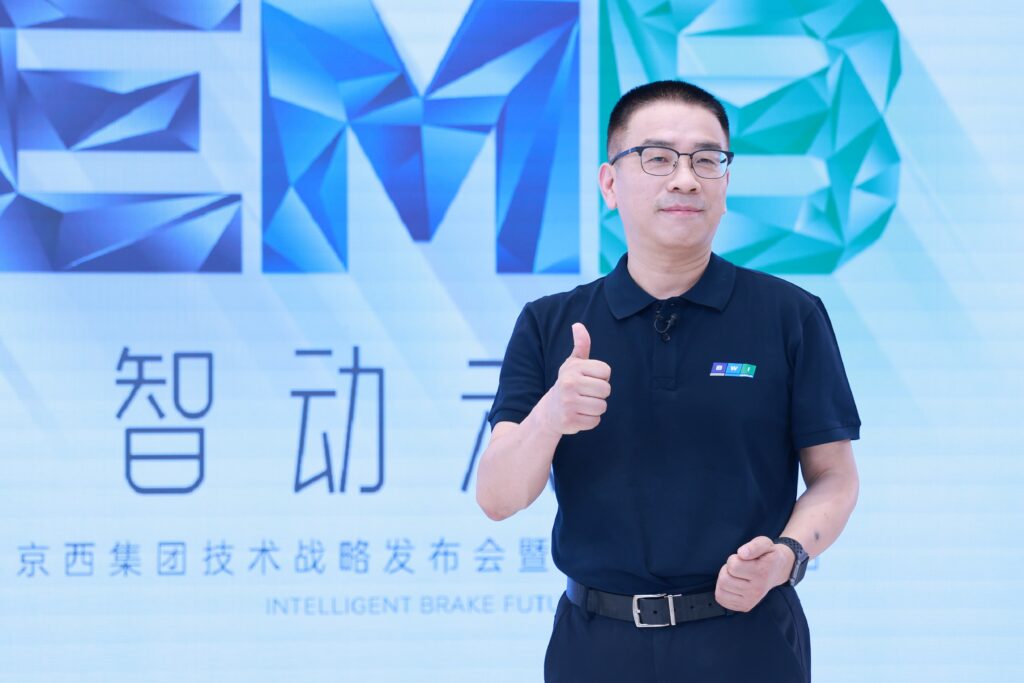
Jiang Yongwei, BWI Group China President, said, “Our Chinese EMB R&D team is improving the performance and durability of the EMB technology to ensure a higher level, and will achieve breakthroughs in the next generation hardware and software this winter.”

BWI Group’s R&D centers located in the United States, Poland, Italy, and China, are in collaboration with the Shanghai Software Center, and jointly advance EMB research and development. BWI EMB underwent winter cold-weather testing in two consecutive winters in 2023 and 2024.

Leading automakers in North America, Europe and Asia have witnessed the testing and gave very positive comments and feedback about the cutting-edge technology and reliability.

BWI Group’s third-generation EMB undergoes winter cold-weather testing in Arjeplog, Sweden, April 2024.

BWI Group will carry comprehensive performance tests, including durability tests, adaptability tests in varied adhesion conditions, and stability tests in diverse environmental conditions, to ensure EMB’s outstanding performance in various scenarios. Subsequently, the product will strictly follow BWI Group’s rigorous process for design validation and production validation, to ensure every stage from concept to production meet the world-class quality standards.

Doug Carson, CTO of BWI Group said: “A large amount of investment was made in our EMB research and development, testing, and production to better realize the eco-friendly, zero-drag, and full-redundancy characteristics. Our dual-motor design boasts the solid R&D which started very early and stands out with its capability to significantly accelerate braking response.”

Doug Carson, CTO of BWI Group, elaborates on the advantages of EMB.

BWI Group’s EMB not only features sleek design, agile response, hardware redundancy, scalable solutions, but also utilizes a fully redundant hardware solution in all-dry format for four wheels. The BWI EMB system will soon support L4 highly automated driving and above.

Powerful, safe, and stable – BWI’s EMB system integrates functions such as ABS, ESC, TCS, ACC, and advanced diagnostic capabilities to ensure safety and reliability. The dual-motor EMB system can significantly accelerate its response speed, while the four-wheel independent control maximizes braking stability.

Truly wire-controlled with a simple structure – BWI’s EMB system adopts a minimal architecture, eliminating servo mechanisms or ESC modules, to be truly wire-controlled. The system removed brake pipes, unified the left and right steering structures, reduced space requirements and enhanced the possibilities for lightweight and minimum designs.

Plug-and-play with optimized costs – BWI’s EMB system utilizes a simplified plug-in-assembly without the need to process brake fluid. It makes a vehicle much easier to assemble in a much shorter time. The system uses fewer components to bring a more cost-effective solution for L3 to L5 highly automated driving vehicles.

Environmentally friendly – BWI’s EMB system achieved zero drag by releasing the calipers instantly after braking, which effectively reduces energy consumption and emissions of carbon dioxide and particulates. The electrical signal transmission replacing brake fluid further minimizes the potential impact on the environment.

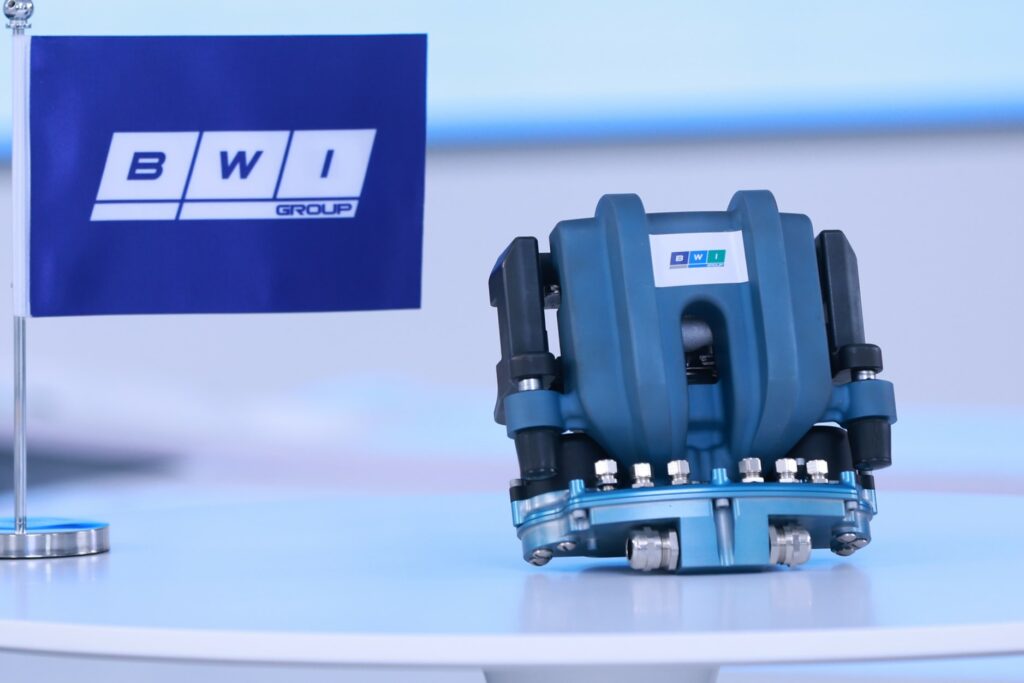
BWI Group’s EMB system prototype.

Promising EMB market prospect

Doug Carson said: “BWI’s unique EMB system has two motors, ball ramp technology, integrated electric park brake, wear adjustment features, and even scalable family approach, offers a very powerful solution to our customers.”

Customers in the U.S. and the Europe showed very strong interests in BWI’s EMB system, and eager to discuss about the cooperation. A car maker who had postponed the EMB application, but restarted the project to discuss with BWI Group. The group also received lots of positive feed backs, such as BWI’s incredibly packaged EMB is the only one fitting into its mechanical structure without any change, according to Doug Carson.

Rapidly developing Chinese automakers are actively embracing BWI Group’s world leading EMB technology. Kaiyi Auto and BWI Group announced the strategic partnership to jointly develop EMB products and technological applications. New-type smart electric vehicle maker, U Power Tech, will integrate BWI Group’s EMB system in super chassis products to expand technological capabilities and fit a wider range of vehicle.

BWI’s powerful and comprehensive EMB solution brings limitless possibilities to automobile production and manufacturing. The coming 5 years will be a critical period for EMB technology development, according to the analysis by Xiong Shusheng, Professor at Zhejiang University Vehicle Research Institute, Visiting Professor at Chinese Academy of Sciences.

Xiong Shusheng predicted EMB market penetration rate may reach 5% in 5 years. In the next decade, it will experience explosive growth, contributing an estimated billion-dollar worth 20% share to the global brake-by-wire market valuing tens of billions dollar.

He points out that BWI Group has taken the lead in the fully dry EMB technology sector, combining the technological advantages of joint research and development between the Europe and the US with the cost advantages of China manufacturing, positioning it to capture a larger share of the EMB market in the future.

Facing the promising market prospects, BWI Group is full of confidence and anticipation for EMB’s future development, and looks forward to working with all parties and embracing the great future. BWI Group advocates for suppliers to work together and jointly promote the development and innovation of EMB technology, aiming to create an open and prosperous EMB technology ecosystem.