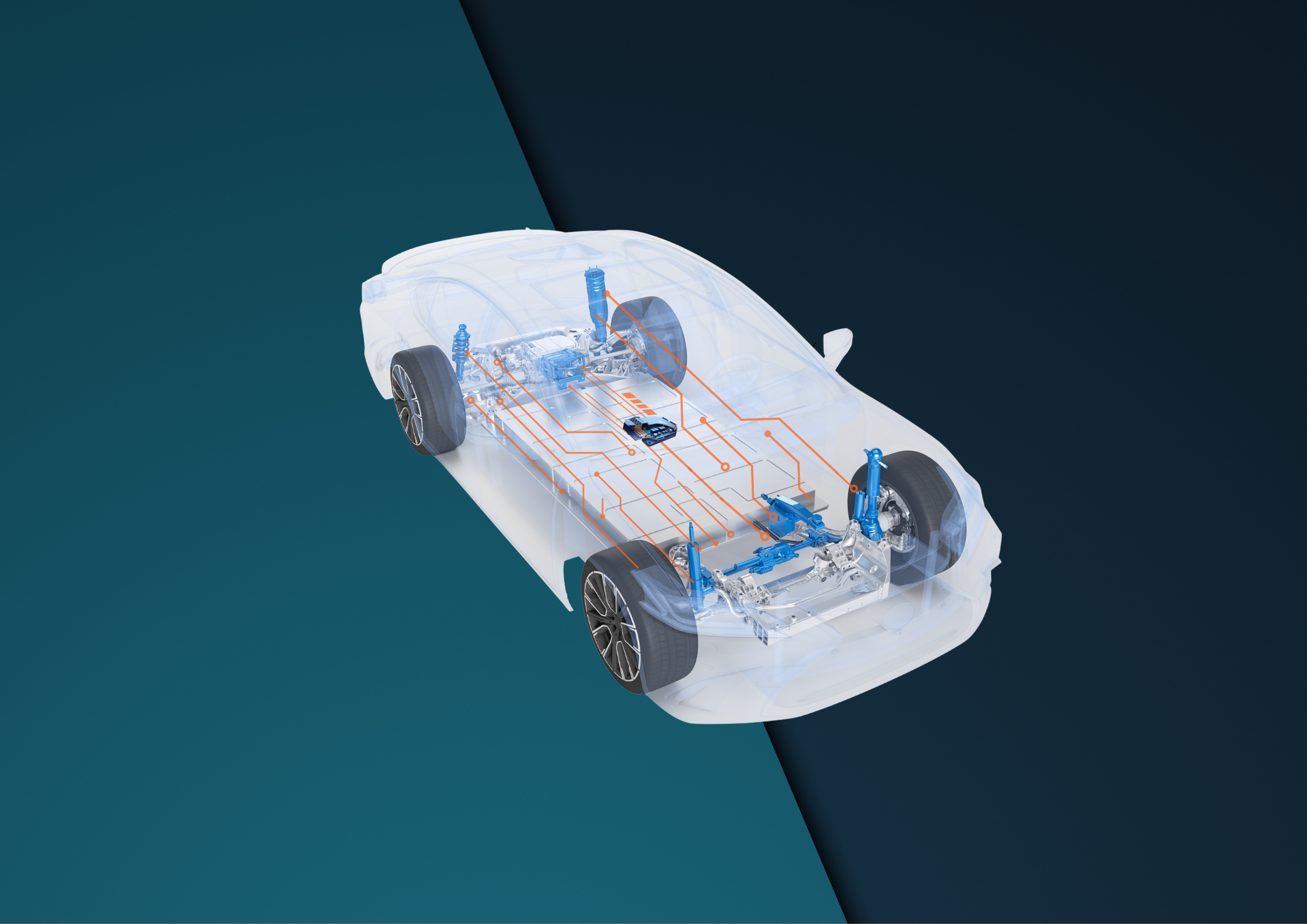
Digital Damping For an SDV Future – Yuan Zamparini, Chief Engineer of Global Suspension Electronics & Software Engineering at BWI Group

The Software-Defined Vehicle (SDV) is moving the industry away from traditional hardware-led designs toward a future where software shapes, controls and enhances vehicle functionality, safety and user experience. This shift to more connected systems opens up new opportunities for digitised suspension technologies, such as MagneRide®. We sat down with Yuan Zamparini, Global Chief Engineer for Controls, Electronics & Software for Controlled Suspensions at BWI Group, to explore this further. 

Q: What is MagneRide and how is it digitally controlled? 


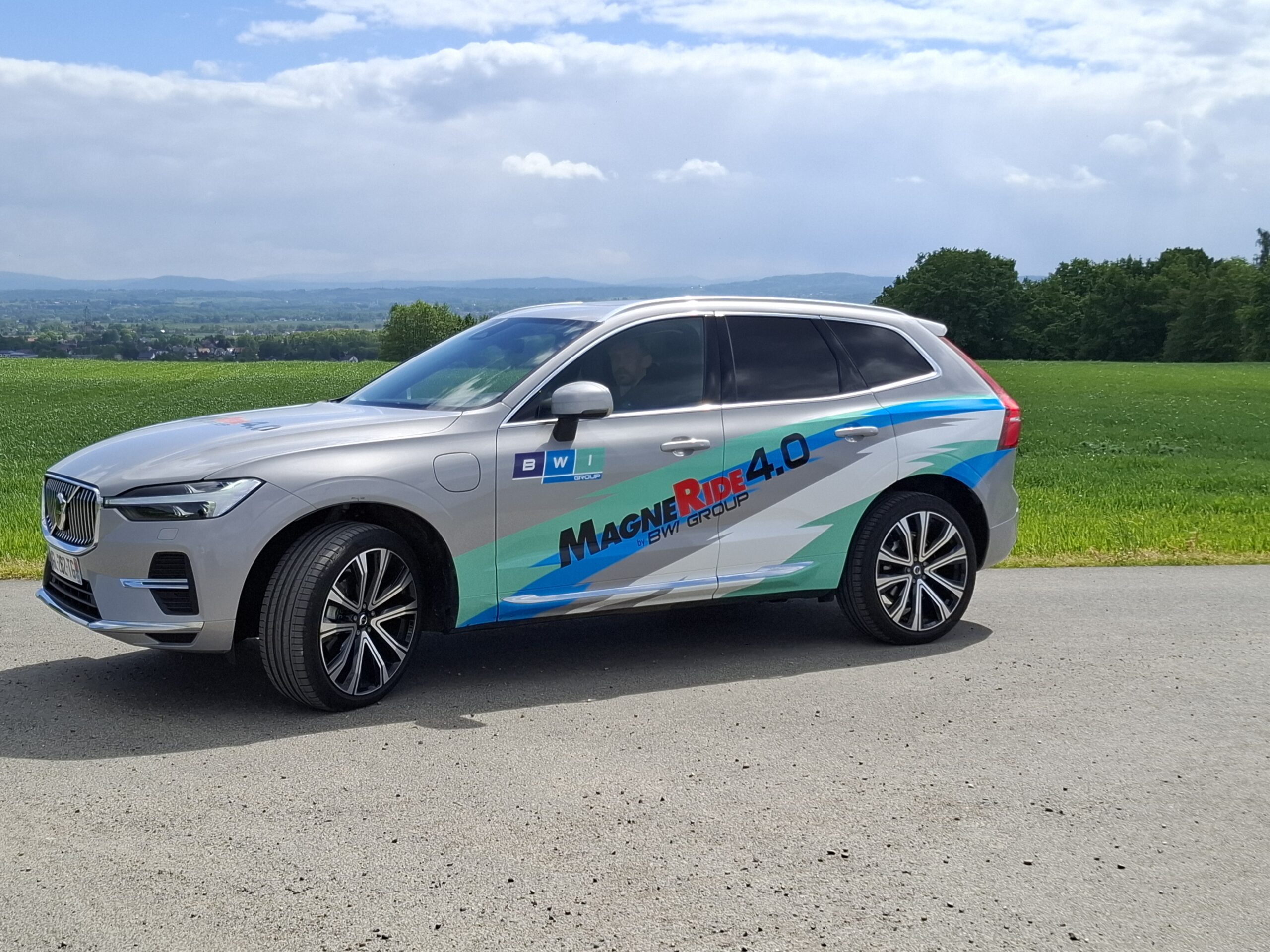
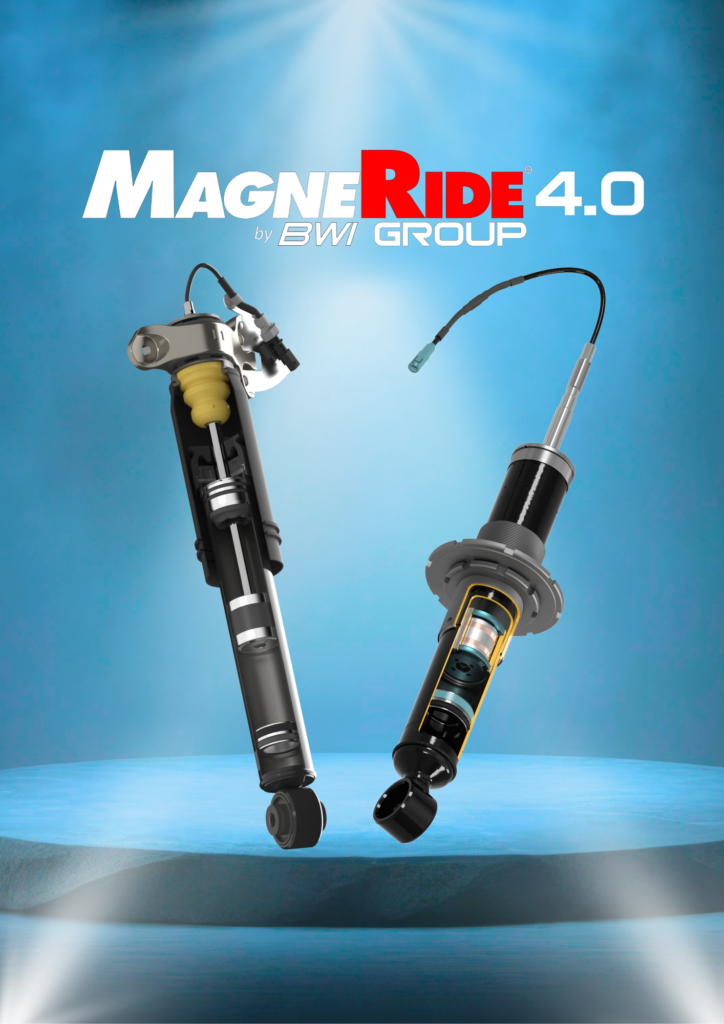
YZ: MagneRide is a semi-active suspension system that uses a magnetic field to energise the magnetorheological fluid, which is filled with iron particles. When a magnetic field is applied, those iron particles align to form a new structure and change the fluid’s viscosity, which alters the damping force. What makes this particularly relevant for software-defined vehicles is that MagneRide is fully and continuously digitally controlled in a wide range of damping forces with millisecond response times. 

As is common with premium technologies, MagneRide found its first applications in high-performance vehicles. But as the industry shifts towards the Software Defined Vehicle and the demand for digital control increases, MagneRide is now being fitted to all types of vehicles, from mid-range sedans to large BEV SUVs. 

Q: How does this digital control advantage translate to SDV applications? 

YZ: The key differentiator is that the system, once base damping characteristics are set, is completely tuneable in software. Unlike solenoid-based semi-active systems that require hardware modifications to change suspension characteristics, MagneRide can be completely recalibrated through the ECU. It enables manufacturers to fully customise settings for regional markets, for example, perhaps to make the vehicle more compliant for North American preferences or sportier calibrations for European drivers. This would simply be too expensive if hardware changes were necessary. We have the capability for over-the-air (OTA) updates, so manufacturers can adjust suspension tuning post-production if required, cost-effectively. 
Q: What new functionalities does SDV architectures unlock for MagneRide? 

YZ: MagneRide’s response times are one of the quickest on the market and it can adjust to road inputs almost instantaneously. However, we have also developed a new preview function. By integrating with the vehicle’s perception system, which is now possible thanks to SDV architectures, we can use cameras and radar to evaluate road surfaces ahead and prime the dampers accordingly. For example, if we detect a pothole or sharp corner approaching, the damping characteristics can be pre-adjusted to optimise the performance. We have also developed a real-time arbitration system that weighs this ‘preview’ information against the ‘instantaneous’ inputs to determine the optimal response. This ultimately increases the performance of the suspension and gives OEMs more flexibility. 

This integration can also be used to optimise the suspension in emergency situations. For example, if automatic emergency braking is triggered, the suspension system can instantly adjust itself to improve braking distances and control. The improvement is only a safety enhancement, not a mitigation mechanism, but in life and death situations, every advantage matters. 

Q: How do you see the relationship between traditional automotive suppliers and OEMs evolving in the SDV era? 

YZ: The relationship is becoming more collaborative and integrated. Rather than simply supplying individual components, we’re becoming development partners. We are contributing to the fundamental changes which are happening to the vehicle architecture. This requires deeper technical integration and long-term partnerships, but it also enables solutions that are much more optimised for the complete vehicle system rather than individual components. We are also responding to an increased demand for a more modular approach to delivery. OEMs want to be able to pick and choose elements of the solution that best fit their architecture. 

Q: What does the move toward modularity mean for suppliers and OEMs? 

YZ: BWI Group is focusing on providing flexible modular solutions that can integrate with both the OEM’s central controller and the zone controller. Depending on their specific needs and existing subsystems, customers can choose different combinations of our hardware, software modules or integration services. This approach gives OEMs more control over their vehicle architecture while still benefiting from our specialised expertise in suspension control algorithms, hardware and software. 

Q: Are there any SDV partnerships with OEMs that you can discuss? 

YZ: We’re currently involved in a co-development program with a major US OEM for their first SDV platform. The customer established their SDV development roadmap back in 2021 and, given our long-standing relationship and the central role MagneRide plays in the SDV architecture, they invited us to participate from the beginning. They have now built prototypes for benches and vehicles and we have supplied the entire digital suspension ecosystem; including the dampers, algorithm in the central controller, smart actuator controller with Ethernet capability, and associated sensors. 

Q: What were the main technical challenges in adapting to an SDV architecture? 

YZ: One of the biggest challenges was integrating real time-controlled systems to the new Ethernet communication architecture. The complexity comes from coordinating multiple digital systems while maintaining the real-time response capabilities our solutions have become famous for and are critical for suspension performance. We have used a parallel approach by developing a level 4 virtual model and physical prototypes, and we’re now on our production infrastructure-ready generation of sample.  

Q: SDV is transforming all aspects of vehicle design. How is it affecting chassis systems in particular? 


The most obvious shift is that all systems are becoming more connected and software-driven. Instead of treating each feature separately, SDV architectures allow a central controller to manage them collectively and cooperatively, making the chassis control a truly integrated part of the vehicle’s ecosystem. This is opening up massive possibilities for OEMs and is where MagneRide’s large scale of controllability has an advantage. 

Q: How is artificial intelligence being integrated into the latest MagneRide systems? 

YZ: A high potential area for the new generation development would be an AI-based self-learning tuning system. MagneRide is tuned using an array of parameters and inputs and varies significantly based on vehicle type, size and intended use. This AI system dramatically reduces both the cost and time required for tuning and testing, which was already faster than solenoid valve-based systems, while ultimately delivering better performance through continuous learning and optimisation. 

Q: Beyond suspension dampers, how is BWI Group positioning itself in the SDV space? 

YZ: We identified the SDV trend early and have been developing complementary digitally-controlled solutions. Alongside MagneRide, we offer semi-active stabiliser bar systems, Four corner Air Suspension control systems, hydraulic lift systems, magnetorheological powertrain mounts and electric braking systems. The advantage is that all these chassis subsystems can work coordinatively and contribute to the fundamental functions of Chassis and body control, sharing inputs and processing functions. This creates opportunities for holistic chassis optimisation that wouldn’t be possible with traditional, isolated systems. 
“We’ve introduced several important technological updates to suit the changing requirements of the industry”- says Philippe Germain

Interview with Philippe Germain, Chief Engineer at BWI Group

MagneRide®, BWI Group’s semi-active suspension technology, is unique in the industry for its use of magnetorheological fluid and its ability to adapt damping forces a thousand times a second. Since its debut in 2002, it’s been the choice of leading performance car manufacturers but as the industry shifts to electric and connected vehicles it is now finding broader applications. We spoke with Phillipe Germain, Chief Engineer at BWI Group, to discuss the latest generation of MagneRide and how it has been designed for the industry’s latest trends.

Q: Let’s start from the top, what is MagneRide and how does it work?

PG: MagneRide is a semi-active suspension system that uses a magnetorheological fluid, which is essentially a damper fluid filled with iron particles. When a magnetic field is applied, those iron particles align within a simple linear orifice, and the aligned particles provide resistance to flow, resulting in a variable damping force. We can precisely and quickly change the damping force to provide high levels of body and wheel control.

Q: How does this compare to solenoid-based semi-active systems?

PG: Solenoid-based dampers use traditional hydraulic fluid flowing through multiple passive and solenoid-actuated valve systems. The result is a damper construction with a significant number of additional components, and which is inherently more complex. MagneRide dampers use fewer components, making it easier to tune and resulting in a more robust solution for NVH and warranty issues.

Q: MagneRide started in performance cars. How has its application evolved?

PG: That’s right. The technology was first adopted by high-performance vehicle manufacturers. They valued the control MagneRide provides for body motion and handling, especially in the 1 to 3 Hz frequency range where handling dynamics live.

But today we’re seeing MagneRide on sedans and SUVs, including electric vehicles, in both North America and China. We’ve made major strides in design efficiency, manufacturing, and supply chain scale, so cost is no longer a barrier. In fact, MagneRide is now comparably priced to solenoid-based systems, which makes it affordable not only for sports models of Lamborghini and Ferrari, but also for other vehicle segments.

Q: How has the industry changed since it was first introduced?

PG: Since MagneRide was first introduced, vehicles have become much heavier. In 2016, the average weight of a car was around 1550kg, this is now closer to 1950kg, a 25% increase and many BEVs are in the 2.5 tons range. This added weight makes controlling the body and suspension very challenging. This is something MagneRide is very good at. Along with more competitive pricing, this advantage is why we are increasingly seeing MagneRide applied to SUVs and BEVs.

Q: Have you adapted the technology for these new applications?

PG: Semi-active damper performance is about fast and accurate sensing and providing fast and accurate damping forces that meet the desired forces. Heavier BEVs require increased damping forces and do so in a more NVH-sensitive vehicle environment.

We’ve introduced several important technological updates to suit the changing requirements of the industry. First, we’ve added wheel accelerometers to more accurately measure suspension movements. This helps us to refine the damping force even more precisely. We’ve also integrated an inertial measurement unit (IMU) to better capture vehicle body dynamics.

Another big improvement is our new bi-directional damper current control solution. It allows us to change the damper’s magnetic flux more accurately, which improves response time and control quality. We’ve also developed a new low-friction rod guide and are working on a low-temperature fluid with more consistent viscosity across a wide range of temperatures.

Specifically for heavy vehicles, we now offer a 52mm piston. It delivers about 80% more damping force than our standard units and gives OEMs a much larger operating envelope to work with.

Q: Why are OEMs looking for a larger operating envelope?

PG: Vehicle dynamacists call it turn-up. It’s the ratio between the maximum and minimum damping force available for a given stroke velocity. MagneRide provides a much broader force range than traditional dampers. This includes providing significant damping force at low velocities, something solenoid-based solutions can’t do.

This is particularly useful for modern vehicles with multiple drive modes. A lot of solenoid systems can’t offer a noticeable difference between comfort and sport modes because they’re limited in their operating envelope. With MagneRide, you really feel the difference. This market-leading turn-up also gives engineers flexibility to tune the vehicle’s character to exactly how they want it.

Q: How does MagneRide simplify vehicle tuning and development for OEMs?

PG: With traditional valve-based dampers, tuning is a hands-on, hardware-heavy process. When we are developing a valve-based damper for a customer, we literally show up with a truck full of different shim stacks and valves to test. We trial different combinations to get the right damping and feel for the vehicle. Every change means disassembling and reassembling the damper, testing it and then fitting it to the test vehicle. So it is a time-consuming task.

With MagneRide, all that tuning is done in software. You plug in a laptop, adjust the control maps, and you’re done. It dramatically reduces development time and cost. And because we provide a control library for customers using their own ECUs, they can get up and running quickly, there is no need to develop low-level controls from scratch.

Q: What is the key performance differentiator for MagneRide?

PG: I’d say the ability to control wheel and body motions independently. In traditional dampers, if you want more body control, you usually sacrifice comfort by stiffening the whole system, including how the wheels respond to high-frequency road inputs. With MagneRide, we can decouple those. That means better ride quality and better handling at the same time, which is something solenoid-based systems really struggle to achieve.

Q: How does this independent control work in real-world driving scenarios?

PG: The system processes inputs from both the road and the driver. It detects wheel movement and driver intentions, such as throttle position, steering input. It then calculates the required damping forces accordingly. For example, when cruising on the highway in a straight line, the vehicle can be optimised for comfort with softer settings. But when the driver enters a corner, the system immediately provides enhanced body control.

Q: So what’s next for MagneRide and BWI Group?

PG: We’re continuing to make the system more modular and accessible. OEMs can buy the full system from us, including software, ECU, sensors and dampers, or they can just use the dampers and provide their own control system. We’re also working on a new modular piston design that supports lower current requirements, which makes integration even easier for customers using their own ECUs.

BWI MagneRide Suspension Secures an annual 400,000-Units

New Vehicle Project

BWI Group has recently obtained a magnetic fluid suspension project from
a leading Chinese automaker, covering multiple models including sedan, SUV,
and high-performance vehicle, with an annual volume of 400,000 units. The
fourth-generation MagneRide® suspension to be applied in this project is
scheduled to officially start mass production in China in mid-2025.

The prototype vehicle developed by BWI Group, with the magneto-rheological
suspension as the core of its chassis, has achieved a substantial upgrade in
chassis performance. It not only significantly improves the vehicle’s handling
but also performs exceptionally well in multiple dimensions such as comfort
and stability. The high recognition from the leading automaker stems from
BWI Group’s leading technology in the suspension industry and reflects its
benchmark status in China’s chassis and suspension fields.

BWI Group is the only company in the world with the capability to develop and
mass-produce magneto-rheological suspension systems.

Superior Value and Performance


The fourth-generation BWI MagneRide® suspension, with its simple structure
and active suspension technology, offers superior handling, comfort, and
safety for vehicles. It provides a better choice for smart chassis upgrade and
the transition to active suspension systems.

When a user driving a vehicle equipped with the fourth-generation BWI
MagneRide® suspension, sensors collect real-time information from the entire
vehicle, wheels, and pedals. The ECU processes this data to achieve
ultra-high-frequency adjustments of up to 1,000 times per second, with a
response speed 5 to 10 times faster than traditional systems. At a vehicle
speed of 100 km/h, the suspension can adjust approximately every 2.5 cm of
travel. With a damping dynamic adjustment range about twice that of other
technologies, it better balances comfort and handling.

In the production and development of car models, MagneRide® suspension
do not require complex valve systems. The hardware is easier to standardize
and universalize, and different damping characteristics can be achieved simply
through software adjustments, making it highly adaptable to various scenarios.
The flexibility in tuning during vehicle development also facilitates subsequent
OTA upgrades. The symmetrical compression and rebound forces provide
fine-tuning capabilities that other suspensions lack, allowing precise
adaptation to minor road surface changes and significantly reducing the
tuning and development cycle.


Cost Reduction and Expansion

As a global leader in suspension and braking systems, BWI Group is
accelerating the mass production of the fourth-generation MagneRide®
suspension in China. With its millions of units production capacity, the
company will leverage economies of scale to significantly reduce the cost of
this world-leading active suspension technology, making it more accessible to
consumers.


BWI Group will continue to expand its production capacity, deepen
cooperation with Chinese and international automakers, promote the
application of magnetic fluid suspension in more vehicle models, and further
empower the upgrade of intelligent chassis systems.

BWI Group Krosno plant is celebrating its 80th anniversary

Sept. 12th, 2024, Krosno, Poland

  • 80 Years of History
  • New challenges for the plant going forward
  • Supplying suspension products to major OEMs globally

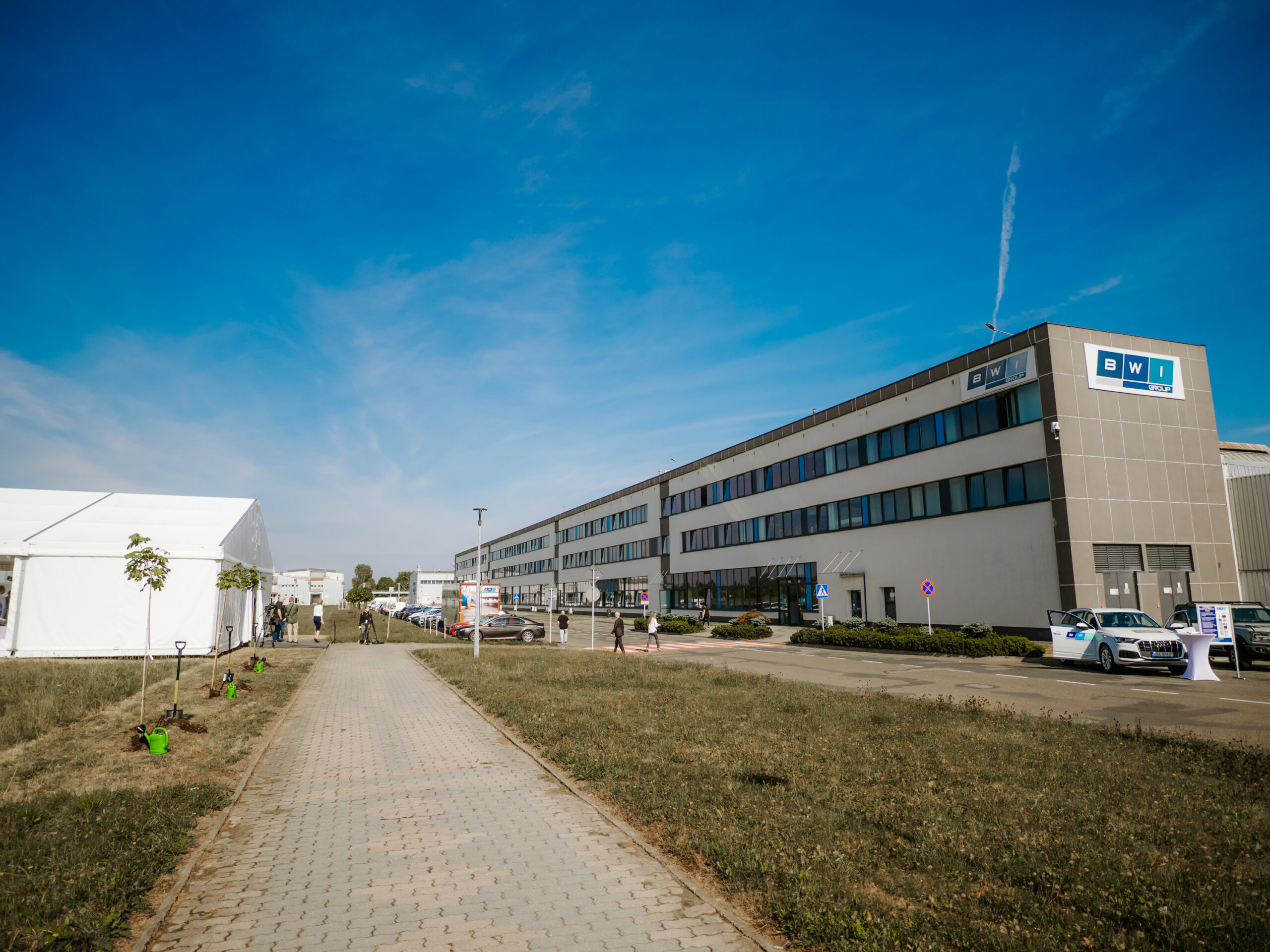
On September 12th, current and former employees, BWI Group management and invited guests took part in the celebration of the 80th anniversary of the shock absorber factory in Krosno. The plant is today not only one of the largest production facility in the BWI Group, but is also, with impressive statistics and decades of experience, a proven and reliable partner supplying globally the automotive industry with innovative suspension solutions.

„Our strength comes from values we stay aligned with. Innovation, quality and customer care are the pillars on which we have built our reputation”. says Dariusz Kucza, Plant Director.

80 Years of History
The beginning of the plant is back to 1944. After years of wartime turmoil, workers returned to the destroyed rubber factory to restore production and revive the spirit of the industry, so much needed in Poland at that time. Initially, the activity was focused on the repair of agricultural equipment. By the end of the 1950s, the Polish government decided to narrow down the production to the manufacturing of spring elements for motorcycles and telescopic shock absorbers. In 1958, the first shock absorber was produced in the Krosno factory, and in 1969 the site was officially named POLMO. In 1997, the American Company Delphi Automotive Systems took over the facility. Under this new name, Krosno plant acquired new customers and modernized its production processes. The development and strengthening of the plant continued with a redoubled intensity when BWI Group became the new owner of the site in 2009.

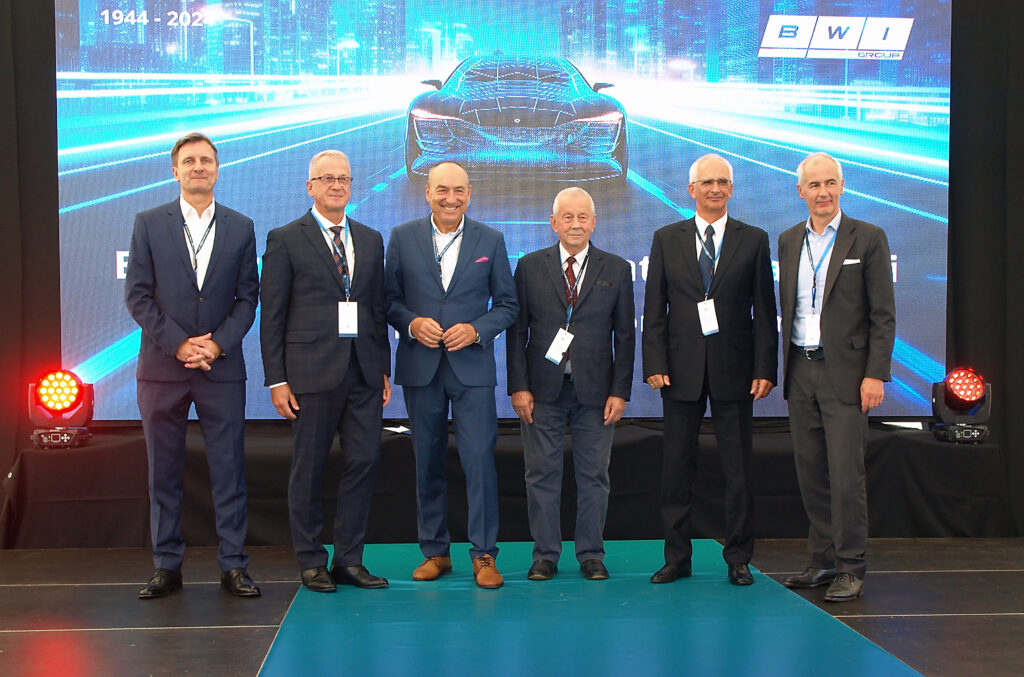
Patrice Colomb – BWI Group President, EU, Dariusz Kucza – Krosno Plant Manager with former Krosno Plant Managers

New challenges
80 years of existence makes the Krosno factory not only the witness of the history, but also shows the transformation that Poland went thru the last eight decades. During the post-war time, there was a giant demand for reviving the industry, while facing a lack of resource and tools required for an efficient operation. Then came the time of privatization of the industry by the end of the 20th century, when foreign capital and modern technologies entered Polish industry. Today in the hands of BWI Group, the manufacturing facility entered into a new chapter with operation based on Manufacturing 4.0 solutions, the highest quality standards and the newly adopted Sustainability policy. In this regard, the plant began its transformation last year towards 50 percent reduction electricity carbon emissions, as well as a 15 percent reduction in production waste by the end of 2024.

Today’s Products and Customers
The factory is currently supplying to major OEMs automotive suspension components, including various shock absorbers and struts, controlled dampers such as MagneRide® dampers, Semi-Active Roll Control systems, Magneto-Rheological engine mounts, but also Electronic Control Units and sensors, which enhances the BWI Group’s ability to develop electronic and electrical architectures. Krosno is delivering to 46 customers in 97 locations worldwide. Among these customers are BMW, Stellantis, Ford, GM, Audi, Volvo, VW, Ferrari and Lamborghini.

The plant in Krosno is one of the largest employers in the Sub-Carpathian region, and its long history makes it also one of the most recognizable and significant industry company of the Polish economy. With more than 300 million units produced since its debut, the plant has not only gone thru the history of industrial development in Poland, but also contributed to it.

“None of our successes would have been possible without the people who made and make this plant. Let me express my great gratitude to all – employees, both those who have been with us for years and those who have joined us recently. It is their hard work, commitment and loyalty that are the foundation of our success.” adds Plant Director expressing his gratitude towards the Staff.


About BWI Group
BWI Group’s is one of the market leader with high quality brake and suspension products and have been recognized by more than 50 global automakers. Thanks to the progress on technological breakthroughs, business development, and production, The company’s total order value rocketed by nearly 300% year-on-year in 2023. The company’s solid development has benefited from the integration of its global resources from three continents, Asia, Europe and North America, to empower global smart mobility. With a heritage reaching back over 100 years, BWI Group is now operating a total of 9 production bases, 7 research and development centers, and 1 software center worldwide.