Battery electric vehicles accounted for 20% of new EU car registrations in the first five months of 2026, up from 15.3% a year earlier, according to ACEA . Add hybrids and plug-in hybrids and more than two thirds of new cars are electrified.
OEMs have a decision to make with electrified vehicles. Use regenerative braking; blending regen with the friction brakes as necessary. Or solely rely on lift-off regen, which is how one-pedal driving became a defining EV behaviour. The first maximises range but typically has poor brake pedal feel, the other has an unaffected brake pedal but is wasting energy.
The handover is where the driver feels the friction brakes take over from regen part-way through a stop. This is particularly noticeable in the last 10km/h of a stop because the electric motor needs to be rotating to generate torque. There are a multitude of variations that mean making brake pedal feel consistent is a real challenge. For example, when the battery is in a high state of charge full regen is unavailable, so the same pedal input produces a different response compared to when the battery is low. Battery temperature, brake temperatures, brake pedal force – these all impact what blend of regen and friction brake is required.
Decoupling the pedal
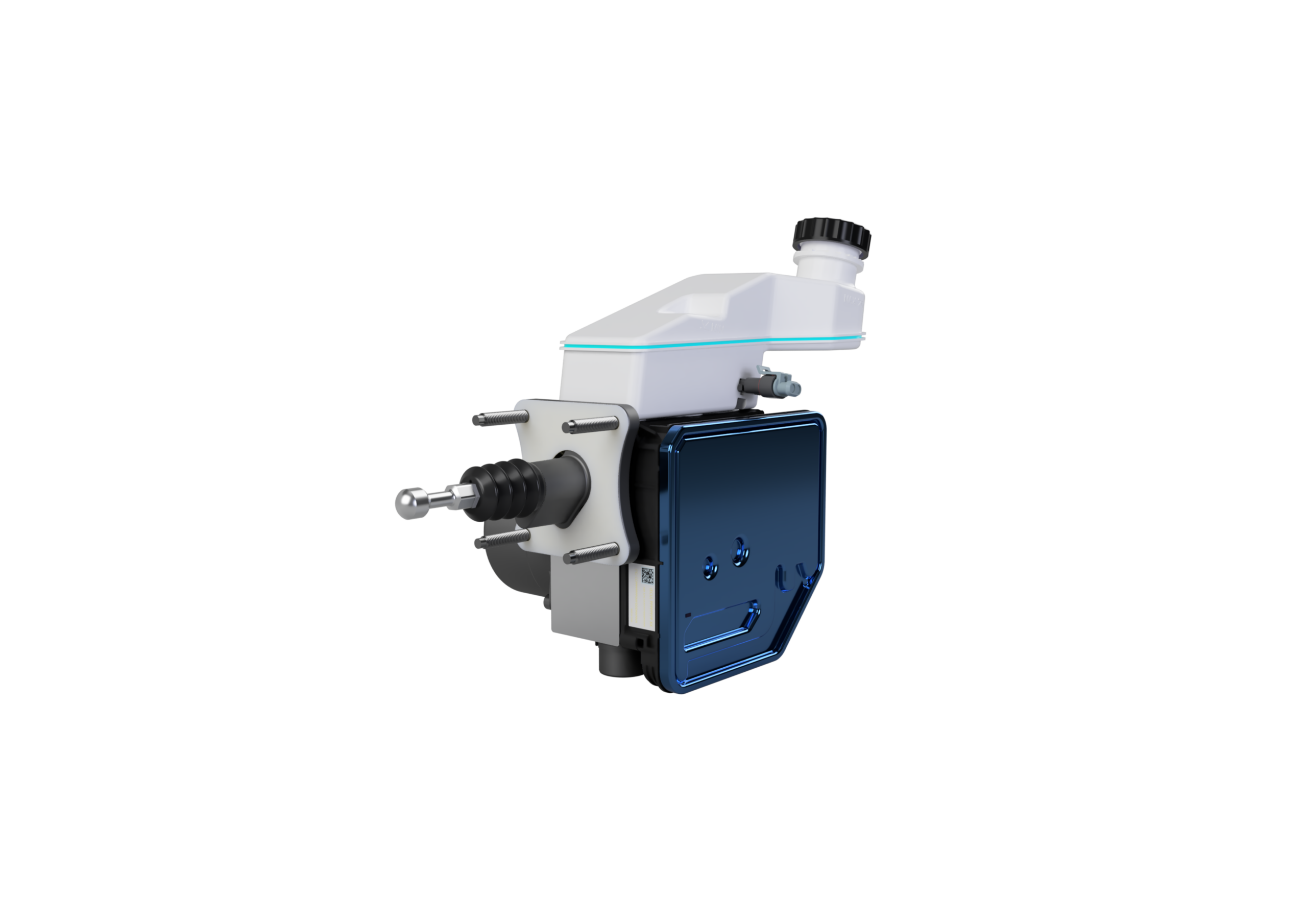
An integrated electronic brake system, such as our iDBC 1-Box, decouples the brake pedal from the brakes themselves. A travel sensor and a pressure sensor read driver intention, an ECU decides how the demand is met, and a motor-driven pressure supply unit builds hydraulic pressure at the wheels. The pedal simply becomes an input signal where the force-travel characteristic/ resistance, or the feel, can be tuned through software.
Through this approach pedal feel can be calibrated to the character of the vehicle: firm and short for a performance derivative, progressive and light for a luxury saloon, and switchable between drive modes on the same car. Decoupling the brake provides better control of the deceleration whether the stop is served by regen, friction or a blend, and regardless of battery state of charge.
An added benefit of an integrated electronic system is that the motor builds pressure around three times faster than a vacuum booster. Reaching full pressure sooner in an autonomous emergency braking situation at highway speeds has a significant impact on stopping distances.
Optimising range
In urban conditions, the energy consumed during braking of pure electric vehicles generally accounts for about 30% of the total energy consumption of vehicle operation. So optimising regenerative braking can have a significant impact on a vehicle’s usable range. The limiting factor is often how confidently the braking system can hold friction out of the blend.
A coupled system has to bring friction brakes in early because the pedal is mechanically linked. A decoupled system can serve the majority of the stop through regen wherever grip, temperature and battery conditions allow, introducing friction only when demand exceeds what the electric machine can absorb. The driver feels one consistent pedal throughout.
Engineered safety
What happens if the electronics fail on a decoupled brake pedal? Our iDBC was designed around fail-safe operation from the concept stage. The system is developed to ASIL-D and a direct hydraulic path from the pedal pushrod to the calipers remains as a mechanical backup. Even under a fault condition that disables every electronic system on the vehicle, the driver can still stop the car.
A brake system needs to be proven durable and safe across the full operating envelope, which is why the iDBC has been through high and low temperature programmes and a full winter test cycle on ice and snow at our low-adherence facility in Arjeplog, northern Sweden.
Pedal feel in the EV era
The nuances of subjective driving characteristics, such as pedal feel, steering weight and damper tuning, can be key brand differentiators, but noticed, in truth, mainly by enthusiasts and the engineers who created them.
Brake pedal feel in the EV era is different. Poor blending is not a nuance and it is immediately obvious to all drivers, whether they can name it or not. It erodes confidence in the car, and confidence is harder to rebuild than it is to lose.
The ambition, then, is not necessarily a pedal feel that impresses. It is a pedal the driver never thinks about. That is a higher bar than it sounds and it is easier to achieve when the pedal is decoupled and software controlled.